
Why Dealership Location Pages Need Supporting Content
Location pages rarely rank on their own. Learn how supporting content lifts visibility, traffic, and leads across every city you serve.
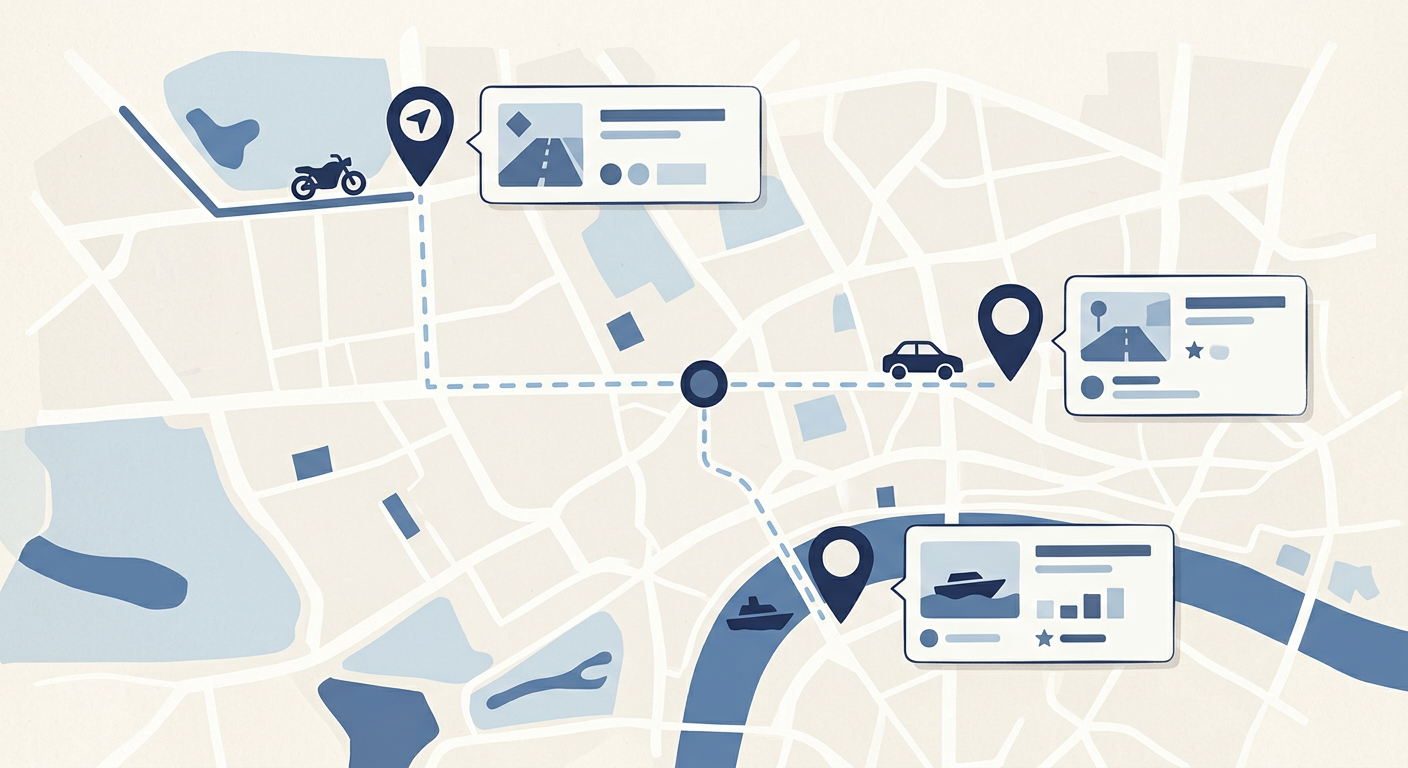
Your location pages aren't a magic ranking button.
They need content around them to prove you serve real shoppers in real places.
Here’s how supporting content fuels local SEO for dealerships—and how to build it.
What is a location page (and why it underperforms alone)
A location page tells Google and shoppers where you are and what you offer. It helps with branded searches and basic NAP consistency. But on its own, it’s rarely enough to win competitive city queries.
Why? One page can’t demonstrate the breadth of services, inventory expertise, and local relevance across a metro. Competitors with content clusters look more authoritative and more helpful.
For example, a single page about “Auto Dealer in North Austin” won’t outrank a competitor who has a city page plus blogs on buying tips, model comparisons, service FAQs, and seasonal content tied to that area. That’s the gap supporting content fills for car dealership SEO.
What “supporting content” really means
Supporting content is everything that surrounds and feeds authority to a location page. It’s topic-focused, geo-aware, and internally linked back to the location hub.
- City- and suburb-specific buyer guides
- Model or category explainers tied to local roads, weather, and use cases
- Service and parts FAQs that solve local conditions (winterization, towing checks, emissions)
- Seasonal and event content (boating season, trail openings, back-to-school maintenance)
- Financing and trade-in education (process, timelines, documents)—without promising specific rates
- Delivery, pickup, and test-drive radius details
- Staff spotlights and community involvement recaps that show you’re present nearby
How supporting content powers local SEO for dealerships
Search engines evaluate more than proximity. They consider topical depth, internal linking, and real-world signals. Supporting content proves you’re the authority on the topics people in that city actually search.
When you publish multiple helpful pieces around a city page—and interlink them—you create a cluster. The cluster earns more entry points from search, lifts the location hub, and captures long-tail queries your competitors miss.
This is the backbone of local SEO for dealerships: own your city pages, then expand with tightly linked, purpose-built articles that answer local buyer and service intent.
Mapping topics to cities, suburbs, and service areas
Most dealerships don’t just serve one city. You cover a radius with pockets of demand—suburbs, towns, neighborhoods, and rural corridors. Your content should mirror that footprint.
- Start with your highest-volume ZIPs and suburbs
- Map inventory categories and services to each area’s needs (towing, off-road, marina access, snow, heat)
- Build content for drive-time keywords: “near me,” “in [Suburb],” “by [Landmark]”
- Use local details that matter: roads, lakes, trailheads, work sites, commute routes, storage needs
- Publish unique examples and images per area to avoid thin, duplicate geo pages
The content cluster model for local SEO for dealerships
Think of each location page as a hub. Around it, publish spokes that match real searches and seasonal patterns. Interlink the spokes to the hub and to each other where it helps the reader.
- Hub: The main location page for City/Area
- Spokes: Buying guides, service FAQs, category explainers, seasonal tips, community posts
- Connectors: Internal links, CTAs, and related posts modules
- Outcomes: More keywords, more entrances, stronger topical authority, better conversions
Clusters also help organize publishing at scale. You can standardize formats (FAQs, buyer guides, checklists) and roll them out per city or per category without reinventing the wheel.
Internal linking that lifts each location page
Internal links pass context and authority. If your spoke articles don’t link back to the location hub—and to each other where it’s useful—you’re leaving performance on the table. Start with a clear template for in-article links and related content blocks.
Want guardrails on volume and placement? See this breakdown on internal link count and structure: How Many Internal Links Should a Dealership Blog Article Have?. Use it to keep your clusters tidy and consistent.
- From every spoke, link to the location hub (once in the intro and once near the CTA)
- Cross-link closely related spokes (e.g., winterization tips to storage checklist)
- Add a “related articles” module on each spoke with 3–5 items from the same cluster
- Use descriptive, natural anchor text that sets click expectations
Balancing sales, service, and parts content
Most stores lean too hard into sales content. That misses big, recurring service and parts demand—and the local queries that come with it. Balance your clusters so they reflect real revenue streams.
Service and parts topics, tied to local conditions, drive steady non-branded traffic year-round. If you need a framework, this overview of Fixed Operations SEO outlines how to turn service, parts, and collision info into local search coverage.
- Create seasonal maintenance guides per city (heat, cold, salt, humidity)
- Publish troubleshooting and how-it-works articles for top ROs
- Explain parts categories locals actually buy (tires, batteries, towing accessories)
- Link service/parts content to location pages and online scheduling
E-E-A-T signals local pages need
Supporting content is also where you can showcase experience, expertise, authoritativeness, and trust. These signals help your location pages earn and keep rankings in competitive markets.
- Author bios with relevant experience (sales, F&I, service advisors)
- Photos and short videos from your lot, service bays, marina, trails, or delivery sites
- Citations and consistency across listings (name, address, phone)
- Clear policies: returns, warranties, safety inspections, delivery radius
- Community involvement: local events, charities, trail cleanups, boating safety days
On-page elements to standardize
Standardization lets you scale quality. Build a repeatable checklist so every location page and spoke article launches complete, fast, and consistent.
- Title and H1 that name the city/suburb and category
- First 100 words mention the area and what you help with
- Unique local photos with alt text tied to the area
- Schema: LocalBusiness/AutoDealer/AutomotiveBusiness where appropriate
- Embedded map, NAP, hours, and service radius
- Internal links to the cluster hub and 2–3 related spokes
- Clear CTAs to call, get directions, or schedule
What “supporting content” looks like by vertical
Different verticals face different local needs. Match your spokes to real-world use in your market.
- Car: commuter routes, winter tire guides, emissions testing prep, city-parking tips
- RV: campground highlights, storage options, towing capacity explainers, seasonal checklists
- Powersports: trail access, safety gear lists, seasonal opening dates, snow vs. mud setups
- Motorcycle: scenic routes, group ride spots, helmet and gear primers, maintenance intervals
- Marine: local lakes/launches, winterization/de-winterization, boat storage, fishing seasons
- Trailer: payload/sizing guides, hitch setup, local regulations, farm and job-site tips
- Heavy equipment: job-site transport, safety checks, attachments by project, rental vs buy
Build vs. buy: manual writing vs automation
If your team can’t publish consistently, clusters stall. That’s where process—and sometimes technology—makes the difference. Decide if your store will write in-house, hire help, or use a platform built for scale.
Here’s a quick comparison to help you choose:
| Option | Pros | Considerations |
|---|---|---|
| In-house writing | Total control, brand voice, local insights | Requires time, repeatable process, and content discipline |
| Traditional agency | Strategy support, editorial capacity | Longer timelines, higher costs, variable local depth |
| Automated platform | Speed, consistency, scalable local coverage | Needs upfront templates and QA to match your voice |
If you’re exploring tools, a purpose-built dealership SEO software platform can automate topic planning and publishing while your team approves and tunes the voice. Comparing approaches? See how automation stacks up against an agency in Dealer Blogs vs SEO agency.
How to measure impact and iterate
Location pages supported by clusters should show wider keyword coverage, higher impressions, and more entrances from non-branded searches. Give content time to index, then refine based on what searchers choose.
- Track: clicks, impressions, and average position for each location hub and spoke
- Monitor: calls, direction requests, form fills, and schedule requests from cluster pages
- Expand: double down on themes winning impressions but sitting on page two
- Improve: add FAQs to spokes with high impressions and low CTR
- Consolidate: merge truly overlapping pieces and redirect to the stronger URL
As momentum builds, consider adding a second wave of spoke articles around high-performing hubs and new suburbs entering your delivery or service radius. Ready to scale without hiring a full writing team? Check plan options on our pricing page.
Final thoughts
Location pages set the stage, but supporting content wins the show. Clusters create topical depth, prove local relevance, and give shoppers useful paths to your location page and calls-to-action.
If you only have a few isolated city pages today, start with one cluster and a simple internal linking template. That momentum is how local SEO for dealerships compounds across every market you serve.
Related resources
- Car Dealership SEO — Overview of strategies and content types that help auto dealers rank locally.
- Fixed Operations SEO — Turn service and parts topics into year-round local traffic.
- Dealership SEO Software — Automate planning and publishing for city clusters.
- Dealership SEO Pricing — Understand cost drivers and plan a sustainable program.
- Local SEO for Car Dealers: Get Found by Buyers Ready to Visit — Practical local coverage ideas you can implement now.
- Dealership Local SEO: The Playbook for Ranking in Your City — Step-by-step local SEO framework for multi-location stores.
Related articles
How Multi-Location Dealerships Should Approach SEO Content
A practical playbook for multi-location dealers to structure pages, content, and reviews so each store ranks locally and wins market share with content that scales.
Aug 29, 2026 · 8 minLocal SEOWhy Local Vehicle Research Content Helps Dealers Rank
Local research pages earn trust, clicks, and backlinks. See how model guides fuel local SEO for car dealerships and turn organic traffic into leads.
Jul 16, 2026 · 8 minLocal SEOThe 5 Website Pages Every Dealership Needs for Local SEO
Strong dealership local SEO starts with the right website structure. Learn the core pages that help dealerships rank for local buyer searches.
Feb 20, 2026 · 5 minDealer Blogs plans, writes, and publishes supporting content around your location pages—automatically and at scale—so you capture more local searches and leads.