
How Many Internal Links Should a Dealership Blog Article Have?
Wondering how many internal links your dealership blog needs? Here’s a practical rulebook with targets, anchors, and workflows that follow dealer SEO best practices.
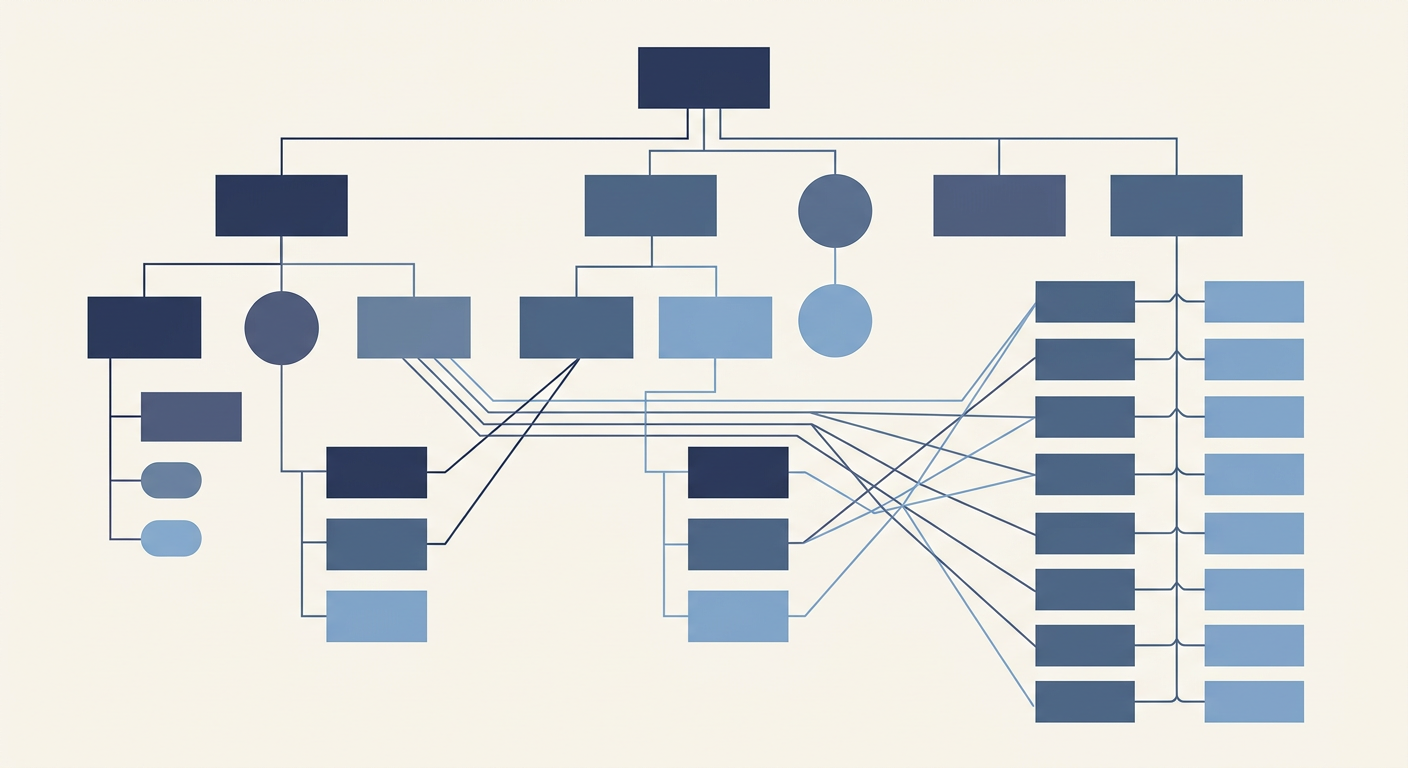
You publish a blog. Google crawls it. Shoppers click it.
But how many internal links should each article include?
Enough to guide users and distribute authority—without looking spammy.
Here’s a simple framework you can repeat across your content library.
Why internal links matter for dealer SEO best practices
Internal links help crawlers find pages, pass topical authority, and keep users moving toward inventory and service pages.
For dealerships, that means more clicks to VDPs, service specials, finance pages, and appointment forms.
See how this plays out in real strategies outlined in our Car Dealership SEO overview.
What actually counts as an internal link
Any in-text link from one page on your site to another page on your site is an internal link.
That includes links to inventory search, VDPs, SRPs, service and parts pages, specials, and other blog posts.
Navigation, footer, and breadcrumb links exist—but we’re optimizing the in-content links you control inside the article body.
The sweet spot: dealer SEO best practices for link count
Aim for 1 internal link per 150–250 words in most dealership blog posts.
Short post? Fewer links. Long guide? More links. Keep it natural and helpful to the reader.
If you’re adding links that genuinely improve the next step for a shopper, you’re doing it right.
Adjust by article length and intent
Different post lengths and goals change your ideal count. Use this reference to set expectations for writers and editors.
| Article length | Recommended internal links | Why | Notes |
|---|---|---|---|
| 500–700 words | 3–5 | Enough to guide users without crowding | Focus on 1–2 primary pages |
| 800–1,200 words | 5–8 | Supports multiple subtopics and next steps | Mix blog-to-core and blog-to-blog |
| 1,300–1,800 words | 7–12 | Long-form needs deeper pathways | Add hub-and-spoke structure |
| 2,000+ words | 10–16 | Comprehensive pillar pages justify more links | Use jump sections and subtopic links |
Intent matters too. An informational guide invites more educational links; a model overview might lean heavier on SRPs and VDPs.
Write for users first, then add links that answer the next logical question or task.
Anchor text that helps users and rankings
Use plain-English anchors that describe the destination. Avoid keyword-stuffed, repetitive phrases.
Vary anchors. One post might use “schedule service online,” another “book a service appointment.” Both can point to the same page.
Make the anchor part of a sentence. Don’t bolt links onto the end of a paragraph.
Where to point from your blog
Use your blog to pull people deeper into high-value pages:
- Service scheduler, service menu, tire center, parts order page, and collision center
- Finance application, trade-in tool, and protection plan overviews
- SRPs and VDPs tied to the topic of the post (not random)
- Category hubs and cornerstone content (brand pages, location pages, and buying guides)
Linking to strategic hubs consolidates authority and cuts thin content. This is core to dealer SEO best practices.
Blog-to-inventory without bloat
Link to SRPs or filtered inventory that actually matches the topic. Don’t scatter VDP links that will expire in a week.
Prefer category SRPs (e.g., used SUVs) over 10 individual VDPs. It’s cleaner for users and crawlers.
If you include a VDP link, one is usually enough when it’s tightly relevant to the post.
Service and fixed ops internal linking
Service topics should send users to the scheduler, key service pages (brakes, oil change, tires), and service specials.
Tie educational content directly to action. If you explain warning signs for brake pads, link to the brake service page and the booking tool.
For a deeper overview of service content strategy, see our Fixed Operations SEO guide.
Navigation vs in-content links: what gets counted
Google crawls your nav, but in-content links carry strong topical signals because they sit inside relevant paragraphs.
Don’t rely on your header and footer to do the job. Add 5–10 purposeful in-article links where they help the reader.
This also improves time on site and pages per session—both healthy engagement signals.
Measure the impact and iterate
Track internal link clicks, pages per session, and assisted conversions from blog entry pages.
Watch rankings for the linked hub pages too. As your interlinking improves, those pages often rise together.
Use city-focused pieces to feed location and category hubs. See the playbook in Local SEO for Car Dealerships.
Workflow to add links at scale
Build a linking checklist for every post: 2–3 links to core hubs, 2–4 to related posts, and 1–2 to SRPs or tools.
Keep a shared index of priority URLs by department so writers can grab the right targets fast.
Automation helps. Many teams use Dealership SEO software to audit link gaps and insert consistent links without manual rework.
Editorial checklist: link placement and quality
Place a helpful link in the first 150–200 words when it fits naturally.
Add at least one link mid-article to a relevant hub and one near the end to a conversion page.
Avoid stacking multiple links in a single sentence. One link per idea is easier to read.
Internal link targets every dealership should maintain
- Sales hubs: brand overview pages, model family pages, used inventory categories, financing and trade tools
- Service hubs: core service pages, service specials, scheduling, tire center, parts catalog
- Content hubs: buying guides, seasonal prep checklists, towing capacity and payload guides, local area resources
- Location hubs: city/metro pages, directions, hours, contact
Refresh this target list quarterly so new posts always have strong places to point.
Avoid these common mistakes
- Linking five times to the same page in one article
- Using the exact same anchor text across dozens of posts
- Pointing to off-topic pages just to “use up” links
- Overloading short posts with 10+ links
- Linking to expired VDPs or short-lived specials without fallbacks
If a link won’t help a user make a better decision, cut it.
Hub-and-spoke for dealership blogs
Treat major topics like hubs: towing capacity, winter tire care, EV charging, boat winterization, ATV trail prep.
Create spokes that answer sub-questions and point back to the hub. Spokes should also cross-link to each other where relevant.
This structure builds topical authority and improves crawl efficiency.
How to choose related blog posts to link
Link to posts that share buyer intent, not just matching keywords.
If the post is about used SUV maintenance, link to used SUV buying guides, service cost explainers, and tire rotation schedules.
Keep it lateral and logical for the reader.
Cross-linking examples that convert
- Model overview → SRP filter for that model, financing options, test-drive form
- Brake service guide → brake page, service specials, scheduler
- Towing guide → hitch install page, parts counter, booking
- Seasonal prep (boats/RVs) → storage page, winterization service, checklist PDF
Every link should move the shopper one step closer to solving the task at hand.
Editorial anchors that feel natural
Good: “compare used SUV options,” “schedule brake service,” “trade-in estimate.”
Risky: “cheap used SUV near me,” repeated 20 times across your site.
Write for humans; search engines will follow.
Scaling across website platforms
Most CMSs support in-line linking, related post modules, and reusable blocks.
If you prefer a fully managed approach, a managed dealership blog service keeps links consistent and on-message across dozens of posts per month.
Teams with strict timelines can also template internal link sections to speed QA.
When to update older posts with new links
Any time you publish a new hub, go back to 5–10 relevant legacy posts and add links to it.
Do the same when you launch a new service page, a seasonal specials page, or a new model family page.
This retroactive linking ensures your best content gets discovered quickly.
How many links per section
As a rule, keep 1 link per short paragraph and 1–2 per longer section with subtopics.
Spread links across the article—top, middle, and bottom—so users always see a next step.
If two links feel redundant, merge them into one stronger link.
Internal links and page speed
Links themselves don’t slow pages down, but heavy widgets or scripts can.
Use simple text links where possible. Keep related post modules lean and image-light.
Fast pages earn more clicks on your internal links.
Internal linking and pillar pages
Pillar pages deserve more incoming links from across your blog, especially from long-tail posts.
But keep pillar pages selective with outbound links—prioritize the best spokes and key conversion pages.
This keeps the user path clear and purposeful.
Budgeting time for internal linking
Add 5–10 minutes per post for link selection and QA. It’s one of the highest-ROI steps in content editing.
If you’re forecasting costs, see how internal linking fits into overall content spend in our overview of Dealership SEO pricing.
QA pass: what to check before publishing
- Each link works and leads to the correct page (no 404s or redirects if avoidable)
- Anchors are descriptive and varied
- Links are distributed across the article
- Most links point to hubs, tools, or relevant inventory
- No stacked links on the same phrase
A 60-second link click-test catches most issues.
Tying internal links to conversion paths
Map links to tasks: read → compare → find inventory → book appointment → contact.
Your blogs should hand off to a tool or page that progresses the visit. Make it obvious and easy.
One clear link beats three competing choices.
When to use a callout or box link
If a link is critical (e.g., schedule service), consider a simple callout near the top and bottom of the article.
Keep it concise and text-based. Avoid heavy images or scripts that slow the page.
Reserve callouts for the 1–2 most important actions.
Align internal links with local coverage
City and neighborhood posts should link to the matching location or directions page.
This tightens local relevance and gives users a clear in-person next step.
It also supports consistent NAP signals across your site.
Automate, but review
Automation can surface relevant targets and maintain consistency across dozens of posts.
Still, a human editor should review anchors and placement for tone and intent.
If you need to scale quickly across platforms, talk to us about implementation. We can align workflows to your CMS and content cadence.
Final checks before publish
Read the article as a shopper. Do the links help you act, compare, or schedule?
If yes, you’re within the right range—even if you’re at the low or high end of the guidelines.
If not, trim or swap until every link earns its keep.
Getting help from the right tools
Content teams save hours per month with link audits, hub mapping, and automatic suggestions.
If you prefer software-led workflows, explore how Dealership SEO software powers scalable interlinking across large content libraries.
Or, if you want hands-off publishing, our team handles planning, writing, and linking.
Converting interest into action
End long posts with one strong link to a conversion page—schedule service, contact sales, or a filtered SRP that fits the topic.
Make that link easy to find and repeat it once near the top if the article is task-focused.
To plan your rollout and costs, check our plans or reach out when you’re ready.
Final thoughts
There’s no magic number for every post, but dealer SEO best practices give you a reliable range.
Use roughly 1 internal link per 150–250 words, point to hubs and tools that progress the visit, and keep anchors natural.
Start simple, measure engagement, and scale with process or a partner. If you want a quick walkthrough of plans and timelines, see our Pricing and we’ll help map your next steps.
Related resources
- Car Dealership SEO — See how internal linking supports automotive content hubs.
- Fixed Operations SEO — Service and parts content that converts with strong interlinking.
- Dealership SEO Software — Automate content audits and internal link suggestions.
- Car Dealership Blog Service — Fully managed content and internal linking.
- Dealership Blog Automation: How to Publish Fresh Content Without a Marketing Team — Scale output without adding headcount.
- Local SEO for Car Dealerships: How to Dominate Your Metro Area — Link city pages and local content for visibility.
Related articles
Why Blog Content Still Matters for Car Dealership SEO
Blog content still matters for car dealership SEO when it answers buyer questions, supports inventory pages, and helps dealers appear in Google and AI search.
Jul 4, 2026 · 7 minDealer SEOWhy Internal Linking Matters for Dealership SEO
Internal links are one of the simplest dealership SEO wins. Here’s how to structure links that boost crawl, relevance, and conversions without adding new pages.
Jul 23, 2026 · 8 minDealer SEOHow to Connect Blog Content to Vehicle Detail Pages
Turn your blog into a VDP traffic engine. See how to connect content to inventory pages with practical SEO for car dealerships that moves shoppers deeper into your funnel.
Aug 4, 2026 · 8 minDealer Blogs plans, writes, and interlinks your posts to drive shoppers to inventory and service pages. See how automation and editorial QA work together for results.