
Local SEO for Car Dealers: Get Found by Buyers Ready to Visit
Local SEO for car dealers that turns searches into store visits. Here’s how to rank for nearby buyers and track what actually drives walk-ins.
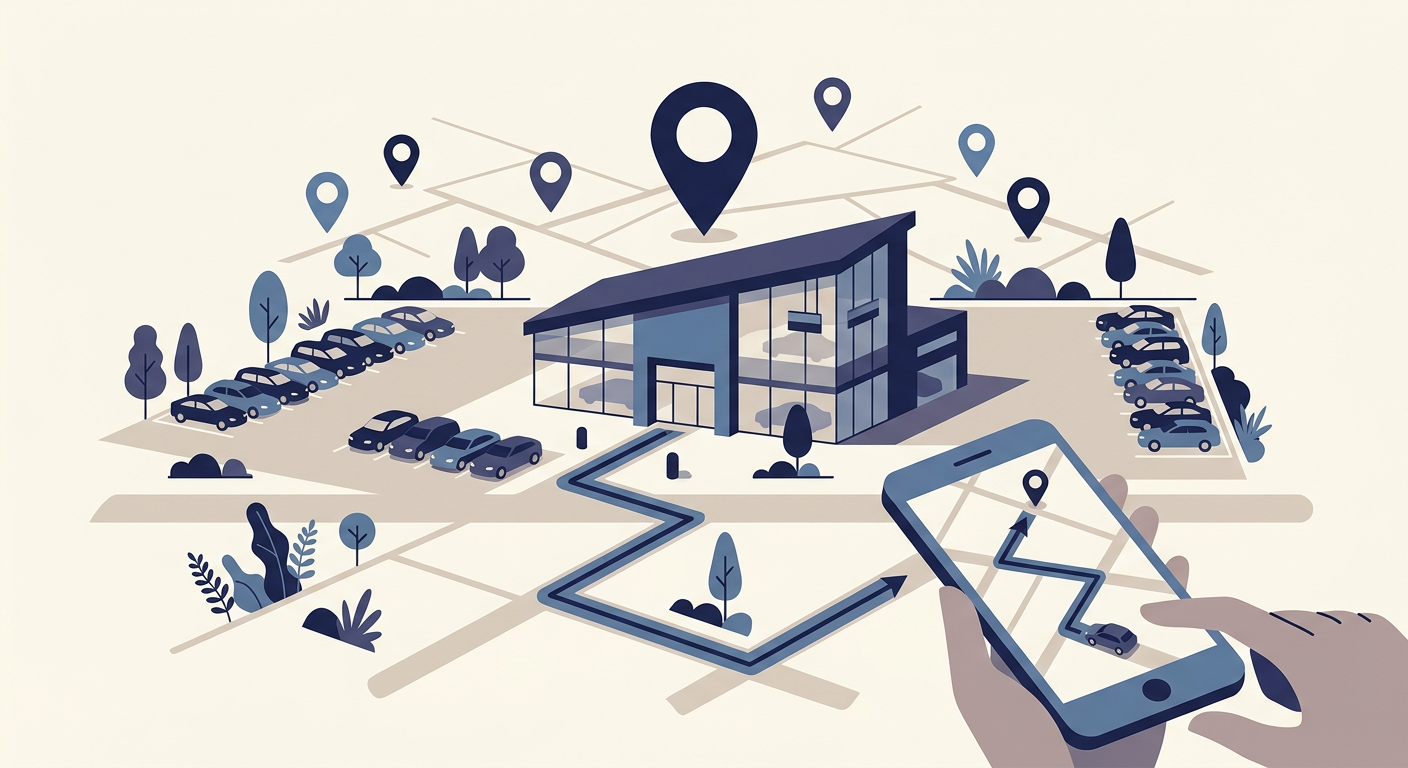
Your next buyer is searching within 10 miles of your store.
They don’t want options across the state. They want a place to visit today.
That’s the job of local SEO for car dealers: get found by ready-to-visit shoppers.
Here’s a plain-English plan you can use now.
What local SEO for car dealers actually means
Local SEO for car dealers is how your store appears in Google’s local results: the Map Pack, Google Business Profile, and localized organic listings.
It focuses on proximity, relevance, and prominence. In practice, that’s your profile, reviews, location pages, and helpful local content.
If you want a deeper strategy overview, start with our practical guide to car dealership SEO. It ties your site, content, and Google Business Profile together.
- Show up in the Map Pack for “dealer near me.”
- Rank organic pages for neighborhood searches.
- Earn reviews and mentions that validate your brand in the city.
- Turn local clicks into in-person visits with strong CTAs and hours, directions, and phone access.
Why local search matters for car dealers
Car dealer local SEO captures bottom-funnel intent. “Honda dealer in Plano” or “used SUVs near me” are searches from people who plan to visit soon.
Local search traffic converts faster. Buyers already know what they want. They’re choosing where to go.
If you want a step-by-step framework, the Dealership Local SEO playbook breaks down city, suburb, and neighborhood tactics.
- Shorter sales cycles from local intent.
- Lower cost per lead than paid media when content scales.
- Better measurement: calls, direction requests, and store visits.
Google Business Profile: your zero-click showroom
Your Google Business Profile (GBP) is often the first impression. Many shoppers won’t even click through before they call or request directions.
Complete every field. Keep it accurate. Update it often.
- Categories: choose the primary that matches your store (e.g., “Car dealer”). Add relevant secondary categories (service, used cars, body shop).
- Hours and holiday hours: always current.
- Services: list make-specific services, financing assistance, trade-ins.
- Photos: upload fresh exterior, interior, staff, and lot photos monthly.
- Products/Vehicles: feature representative models, segments, or specials (no pricing claims).
Use Posts for timely updates: events, new arrivals by segment, seasonal service reminders. Treat it like a lightweight content channel.
Location pages that convert showroom visits
Create a primary location page for your city. Add secondary pages for major suburbs you truly serve.
Make each page unique and useful. Don’t copy-paste with city swaps.
- Start with purpose: “Your [City] car dealership—directions, hours, and what we stock.”
- Embed a clean map and driving directions from key landmarks.
- List top vehicle categories (e.g., used SUVs, certified sedans) with internal links.
- Add service and parts highlights if applicable.
- Include 2-3 recent local reviews that mention the city name.
Add scannable CTAs: Call, Get Directions, Book a Test Drive. Make mobile users tap once.
On-site content for local SEO for car dealers
Your blog is how you scale local coverage: questions, comparisons, and ownership topics that shoppers search before they visit. A managed car dealership blog service can keep this consistent year-round.
Write content that aligns to inventory segments and local intent. Don’t chase broad national topics.
- Model and segment comparisons for the trims you commonly carry.
- “Best cars for [City] winters/summers/commutes.”
- Trade-in, financing, and paperwork explainers with local timelines.
- Service and maintenance tips tied to local climate and roads.
- Neighborhood spotlights with driving and parking tips near your store.
If publishing at scale is tough, consider purpose-built dealership SEO software. It automates briefs, drafts, and scheduling so your team can edit and approve faster.
Reviews and reputation that move the Map Pack
Reviews are a major local signal. Volume, velocity, and response quality matter.
Ask consistently and make it simple. QR codes in-store. Post-service emails. Delivery follow-ups.
- Request specifics: “How was your test drive and trade-in experience?”
- Reply to every review within 48 hours.
- Use city, model, and department language naturally in responses.
- Address issues publicly, move details to a call, and close the loop with an update.
Highlight reviews on location pages and core shopping pages. Social proof belongs near CTAs.
Citations and NAP consistency
Citations are mentions of your name, address, phone, and website across trusted directories.
Keep NAP 100% consistent. Small differences can split authority.
- Start with major maps/directories (Google, Apple, Bing, Yelp).
- Add automotive directories and local chambers.
- Audit quarterly for duplicates, old addresses, and incorrect phone numbers.
Site architecture and internal linking
Clear navigation helps Google and shoppers understand what you sell and where you serve.
Build a hub-and-spoke structure: city page hubs, model/segment pages, and related blog posts that link between each other.
- Link from city pages to relevant inventory filters and blog posts.
- Link blog posts back to city pages and core shopping paths.
- Use consistent anchor text like “used SUVs in [City]” where natural.
Proximity, relevance, and prominence: winning the Map Pack
Proximity you can’t control. Relevance and prominence you can.
Make your profile, pages, and content match the searcher’s intent. Then grow your authority with reviews and local mentions.
- Relevance: categories, services, localized content, product/vehicle listings in GBP.
- Prominence: reviews, press, sponsorships, local links.
- Engagement: calls, direction requests, and clicks from your GBP.
Map Pack rankings vary by block, not just city. Check multiple neighborhoods, especially where buyers live and work.
Tracking what matters in car dealer local SEO
Tie local SEO to actions, not vanity metrics.
Track calls, direction requests, messages, and form leads. Connect these to store visits where possible.
- GBP Insights: calls and direction requests.
- UTM-tagged links from GBP to measure on-site behavior.
- Call tracking with dynamic numbers on site (keep your primary NAP number fixed in GBP and citations).
- Goal tracking for clicks on Phone, Directions, and Chat.
Roll up results by city and suburb. Compare performance to where your ad dollars go. If you need a predictable content pipeline, review plans on our pricing page.
Content topics that capture local demand
Use search data, sales team input, and service write-ups to fuel topics.
Map every post to a local query and a conversion goal.
- “Best used SUVs for snow in [City].”
- “Should I buy or lease in [State]? Local tax basics.”
- “[City] road trip: fuel-efficient cars for weekend getaways.”
- “How trade-ins work in [City]: timeline and tips.”
- “Where to service hybrid batteries in [City].”
Keep it specific. Reference local roads, weather, parking, and common commutes.
Common local SEO mistakes to avoid
Thin city pages with swapped city names won’t last. Neither will missing GBP details.
Fix the basics before scaling content.
- Inconsistent NAP across directories.
- No primary city page or weak suburb pages.
- Ignoring reviews or replying with canned text.
- Slow site on mobile and no click-to-call.
- Publishing broad, national content that never converts locally.
DIY vs automation vs agency: which path fits your store?
Your choice depends on team bandwidth and timeline. Match the model to your goals and resources.
Use the table below to compare approaches at a glance.
| Approach | Strengths | Risks | Best for | Effort |
|---|---|---|---|---|
| DIY in-house | Full control, authentic local voice | Inconsistent publishing, skill gaps | Single-rooftop stores with a hands-on marketer | High |
| Automated software | Scales research, briefs, and drafts fast | Needs editorial review for brand voice | Multi-rooftop groups or lean teams | Medium |
| Agency-only | Strategic oversight, reporting | Higher costs, bandwidth split across clients | Stores needing white-glove support | Medium-High |
| Hybrid (software + light agency) | Speed + quality control, flexible | Requires basic in-house review | Dealers wanting scale and oversight | Medium |
If you want to scale with control, explore AI SEO for car dealerships. It blends automation with editorial guardrails so your content stays accurate and local.
A 90-day local search car dealer plan
You don’t need a year to see movement. Get the fundamentals live, then compound.
- Days 1–15: Clean NAP, finalize GBP categories, hours, services, and photos. Publish a strong city page with map, directions, inventory categories, and 3 localized reviews.
- Days 16–30: Launch two suburb pages. Add internal links from header/footer and top blog posts. Start a review request workflow.
- Days 31–60: Publish 6–8 local blog posts tied to inventory segments. Add UTM on GBP links. Track calls and direction requests.
- Days 61–90: Expand citations, refresh GBP photos, post weekly. Add two comparison posts and one trade-in explainer. Audit internal links to push authority to city/suburb pages.
Repeat this cycle quarterly. Add topics, refresh pages, and tighten tracking.
Measuring success beyond rankings
Rankings fluctuate by block. Focus on outcomes.
If calls, direction requests, and lot visits rise in your primary zip codes, your local SEO is working.
- Compare month-over-month GBP calls.
- Track direction requests by neighborhood.
- Attribute walk-ins to organic when no ad touch exists.
- Pair CRM close rates with local organic sessions.
How inventory and fixed ops support local visibility
Local shoppers search across sales and service. Cover both to widen your footprint.
Service content earns links and repeat visits, which lifts your whole domain.
- Add seasonal tire, battery, and brake content for your city.
- Explain state inspection timelines and requirements.
- Surface service CTAs and phone on every location and model page.
Scaling content without burning your team out
Consistency beats bursts. Set a sustainable cadence and stick to it.
Batch briefs, draft in sprints, and schedule posts ahead.
- Use topic clusters: city page → segment pages → related blog posts.
- Refresh top posts quarterly with new data, images, and internal links.
- Repurpose posts as GBP updates and social snippets.
From clicks to visits: conversion principles that matter
Local buyers want fast answers. Remove friction everywhere.
Design for tap-first actions on mobile.
- Prominent click-to-call and Get Directions buttons.
- Store hours above the fold.
- Embedded map with one-tap navigation.
- Short lead forms and instant chat options.
When to bring in help
If content stalls or reporting is fuzzy, bring structure and support.
Choose partners who speak automotive, not just generic SEO.
- Clear local content roadmap tied to inventory.
- Transparent reporting on calls and direction requests.
- Editorial review that protects brand and compliance.
The right fit speeds up execution without losing your voice. If you prefer software-assisted publishing, evaluate tools built for dealers, not generic blogs.
Final thoughts
Local SEO for car dealers is simple in theory and won by execution. Nail your profile, build real location pages, publish helpful local content, and ask for reviews every day.
Do that consistently, and you’ll show up where it counts: in the Map Pack and on phones of buyers close enough to visit today.
Related resources
- Car Dealership SEO — Full strategy for franchise and independent stores.
- Car Dealership Blog Service — Keep local content publishing on schedule.
- Dealership SEO Software — Automate briefs, drafts, and scheduling.
- Dealership Local SEO: The Playbook for Ranking in Your City — City and suburb tactics.
- Car Dealer SEO: A Practical Guide to Ranking in Your Local Market — Step-by-step local plan.
Related articles
Local SEO for Car Dealerships: How to Dominate Your Metro Area
Practical local SEO for car dealerships. Map pack wins, city pages, reviews, and content that captures buyers across your metro—and turns searches into showroom visits.
Jul 31, 2026 · 8 minLocal SEOAutomotive Local SEO: How Dealerships Win Nearby Car Shoppers
Practical automotive local SEO tactics to win map pack visibility, capture “near me” car searches, and turn local intent into leads and showroom visits.
Jul 26, 2026 · 8 minLocal SEODealership Local SEO: The Playbook for Ranking in Your City
A practical playbook for dealership local SEO. Learn how to optimize Google Business Profile, build local content, and win rankings in your city.
Jul 26, 2026 · 8 minDealer Blogs automates research, briefs, and publishing for dealership websites, with editorial review to keep it accurate and on-brand.