
Dealership Blog Automation: How to Publish Fresh Content Without a Marketing Team
No marketing team? No problem. Learn how dealership blog automation keeps fresh, SEO-friendly content publishing every week without extra headcount.
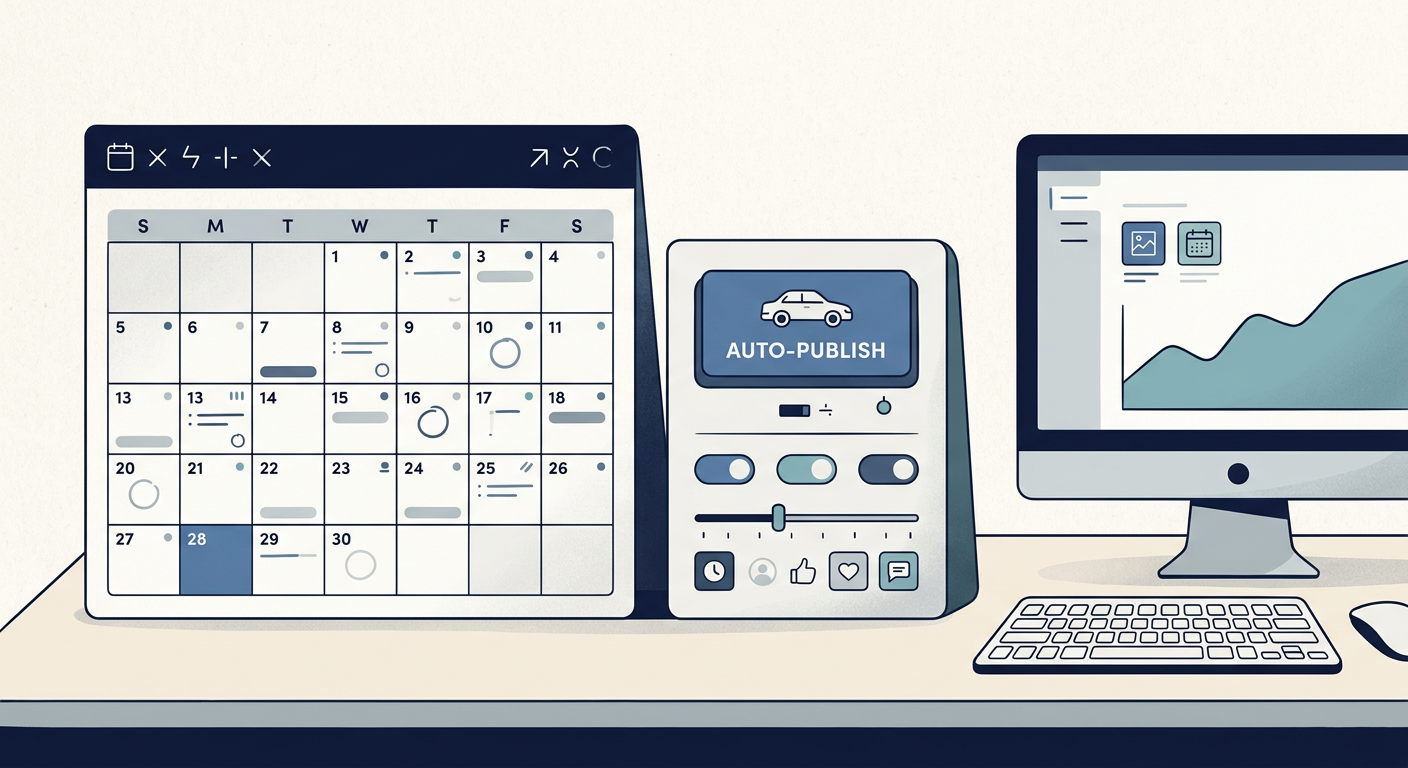
You know you need fresh content to rank, but your team is already maxed out.
Sales needs support. Service wants visibility. Everyone wants results yesterday.
Dealership blog automation is how you publish every week without hiring another marketer.
Here’s how to make it work—simply, predictably, and with quality you can stand behind.
Why dealership blog automation matters now
Most dealers don’t lose rankings because they lack ideas. They lose rankings because content stalls when people get busy.
Search rewards consistency, topical depth, and local relevance. Automation helps you deliver those three, even during end-of-month crunch or peak season.
The payoff is compounding: each post can rank, earn links, support inventory pages, and capture long-tail searches your competitors ignore.
- Stay visible when staff is focused on sales events
- Fill content gaps across new, used, and fixed ops
- Build topical authority around your brands, segments, and city
What dealership blog automation actually does
Dealership blog automation is a workflow that plans topics, drafts posts, routes edits, and publishes on a schedule—without daily hand-holding.
It standardizes the boring parts (briefs, formatting, tags, internal links) so your team only weighs in where it matters: voice, accuracy, and offers.
- Monthly editorial calendar aligned to inventory and seasonality
- Keyword research mapped to local intent and buyer stages
- Drafting, editing, and compliance checks
- On-page SEO: headers, meta, schema, and internal links
- Scheduled publishing and automatic syndication
If you’d rather not stitch tools together, a purpose-built platform like dealership SEO software centralizes planning, production, approvals, and publishing.
The SEO job your blog should be doing
Your blog isn’t just news. It’s a search engine entry point for shoppers at different stages—research, comparison, service, and local discovery.
Posts should ladder up to core pages and categories, strengthening the site’s ability to rank on the model-, category-, and service-level queries that move revenue.
- Capture long-tail searches ("towing capacity in winter," "best commuter SUV under snow conditions")
- Support inventory categories (trucks, SUVs, EVs, certified pre-owned)
- Feed fixed ops with seasonal maintenance and local service content
- Answer ownership questions to keep past buyers engaged
When your blog consistently does this job, rankings become more stable and your site earns more non-brand traffic you don’t have to pay for.
Signs you’re ready for an automated blog for car dealerships
You don’t need automation for everything. You need it when content rhythm breaks.
- Posting spikes around sales events, then goes quiet for weeks
- Managers write drafts that never get edited or published
- You rely on social posts but lack search-focused content
- You have inventory coverage but no evergreen articles
- Service and parts pages exist, but no seasonal blog support
Manual, agency, or automation? A quick comparison
There are three realistic ways to keep content flowing. Each has tradeoffs.
| Option | What it takes | Pros | Cons | Best for |
|---|---|---|---|---|
| Manual (in-house) | Staff time, topic planning, SEO know-how | Total control, deep product knowledge | Inconsistent output, stops during busy weeks | Stores with dedicated marketers |
| Agency | Budget, meetings, approvals | Scalable, hands-off production | Higher cost, variable quality, slower changes | Groups seeking turnkey help |
| Automation (software + light edits) | Quick setup, short approvals | Consistent cadence, lower cost per post, data-driven topics | Needs clear brand rules, initial setup | Stores needing weekly content without new hires |
If you’re weighing partners, this side-by-side on Dealer Blogs vs SEO agency outlines pricing models and workflow differences in more detail.
How automated dealership content is created and approved
Good automation doesn’t remove you. It removes friction.
You get an editorial calendar built from search data, local seasonality, and inventory focus. Drafts arrive formatted for your CMS. You approve, request edits, or auto-approve by rules.
- Intake: brands, city list, services, inventory focus, tone
- Calendar: 4–12 posts per month by theme and season
- Drafts: short, skimmable, optimized, with internal links
- Edits: local proof points, store policies, media
- Publish: scheduled with categories, tags, and schema
Running on WordPress? Prebuilt workflows like WordPress dealership blog automation connect calendars to your CMS, so approved posts auto-publish with the right settings.
Keep quality high without slowing down
Consistency is useless without quality. Your content has to be accurate, local, and on-brand.
Build an editorial checklist that’s fast to apply and hard to skip.
- Voice and brand terms: names, disclaimers, CTAs
- Fact checks: specs, towing, trim availability, warranties
- Localization: roads, weather, nearby towns, events
- On-page SEO: headings, internal links, meta, schema
- Readability: plain English, short sentences, clear scannability
Quality also means experience. Include brief anecdotes from real service questions, test drives, or local conditions. That signals practical know-how shoppers trust.
Topics that win traffic and support inventory
Automation shines when it maps topics to buyer journeys and product lines.
Use repeatable topic clusters that tie directly to categories you care about this quarter.
- Comparison content that supports model or segment pages
- How-to and maintenance guides for fixed ops
- Seasonal and weather-driven content for your region
- Ownership tips that nurture past buyers
- Community and route-based posts that reference local landmarks
Link relevant posts to category and department pages to strengthen them. Keep it natural and helpful—context first, internal link second.
Local SEO content your automated blog must include
Local intent wins for dealers. It narrows competition and speaks directly to your buyer’s reality.
Bake local signals into your calendar from day one.
- Weather- and terrain-specific guidance (mountain passes, coastal corrosion, winter starts)
- City- and suburb-targeted posts for high-priority areas
- Event-driven content tied to fairs, races, or seasonal openings
- Road-trip and towing guides relevant to boats, RVs, or trailers
- Service reminders tied to climate and mileage patterns
Local specificity can be subtle: citing known roads, park entrances, boat launches, trailheads, or average snowfall. These details build relevance without stuffing keywords.
Technical setup: CMS, structure, and internal links
Your CMS should make publishing easy and SEO-sound by default. Structure posts so Google—and customers—understand where each one fits.
- Use clear categories (New, Used, Service, Parts, EV, Towing, Winter) and relevant tags
- Standardize title formats and meta, with 155–160 character descriptions
- Add internal links from posts to category and department pages
- Enable article schema and ensure clean, fast templates
- Compress images and set descriptive alt text
Automation can also assist with SEO research and outlines. See how we apply it responsibly in AI SEO for Car Dealerships.
Measure what matters from day one
You don’t need a data team. You need a short list of signals that prove momentum.
- Organic sessions to blog posts and assisted conversions
- Rankings for target clusters and local modifiers
- Internal link click-through from blog to category pages
- Time on page and scroll depth (is it actually read?)
- New vs. returning visitors and city distribution
Tie topics to outcomes. For example, compare traffic and click-through from a towing guide to your truck category versus a general brand story. Keep what compounds, cut what doesn’t.
Getting started with dealer blog automation
Keep the rollout simple: define rules, approve a calendar, and let the system run.
- Document voice, brand terms, CTAs, compliance items
- Prioritize topic clusters that match quarterly goals
- Approve 60–90 days of posts at a time
- Set rules for images, internal links, and scheduling
- Review monthly, not daily—adjust based on results
Running a platform-hosted site? Tap native workflows such as DealerOn Blog Automation to speed up approvals and publishing.
When you’re ready to budget, check plan tiers and volume options on our pricing page and match cadence to your growth targets.
Final thoughts
Dealership blog automation isn’t about replacing marketers. It’s about removing bottlenecks so your team can focus on strategy while the machine handles the calendar.
With a clear plan, quality controls, and the right tools, you can publish fresh, local, SEO-driven content every week—without adding headcount.
Related resources
- Dealership SEO Software — See how planning, production, and publishing work in one place.
- Dealer Blogs vs SEO Agency — Compare workflows and pricing models side by side.
- AI SEO for Car Dealerships — How automation and human editing work together.
- WordPress Dealership Blog Automation — Connect calendars to WordPress for auto-publishing.
- Automotive SEO Agency vs Automated Content Software — Pros and cons to help you choose.
- SEO for Car Dealerships: The Content Playbook That Actually Works in 2026 — Tactical guidance for building topical authority.
Related articles
Automotive Content Automation: How Dealerships Can Publish More Without Hiring Writers
Consistent publishing is hard for dealerships. Content automation helps stores build search visibility without managing topics, writers, formatting, and posting.
Feb 24, 2026 · 7 minAutomationHow to Build a Dealership Content Engine Without Hiring Writers
Stand up a scalable content engine for your dealership without hiring writers. Use automation, data, and light editing to publish content that grows traffic and leads.
Jul 8, 2026 · 8 minAutomationDealer Blog Automation vs Hiring an SEO Agency
Should you automate your dealership blog or hire an SEO agency? Compare costs, speed, control, and results so you can publish consistently and grow local traffic.
Aug 31, 2026 · 8 minDealer Blogs automates topic research, drafting, editing, and publishing for your dealership blog, with your voice and local focus built in. See how it works.