
Why Internal Linking Matters for Dealership SEO
Internal links are one of the simplest dealership SEO wins. Here’s how to structure links that boost crawl, relevance, and conversions without adding new pages.
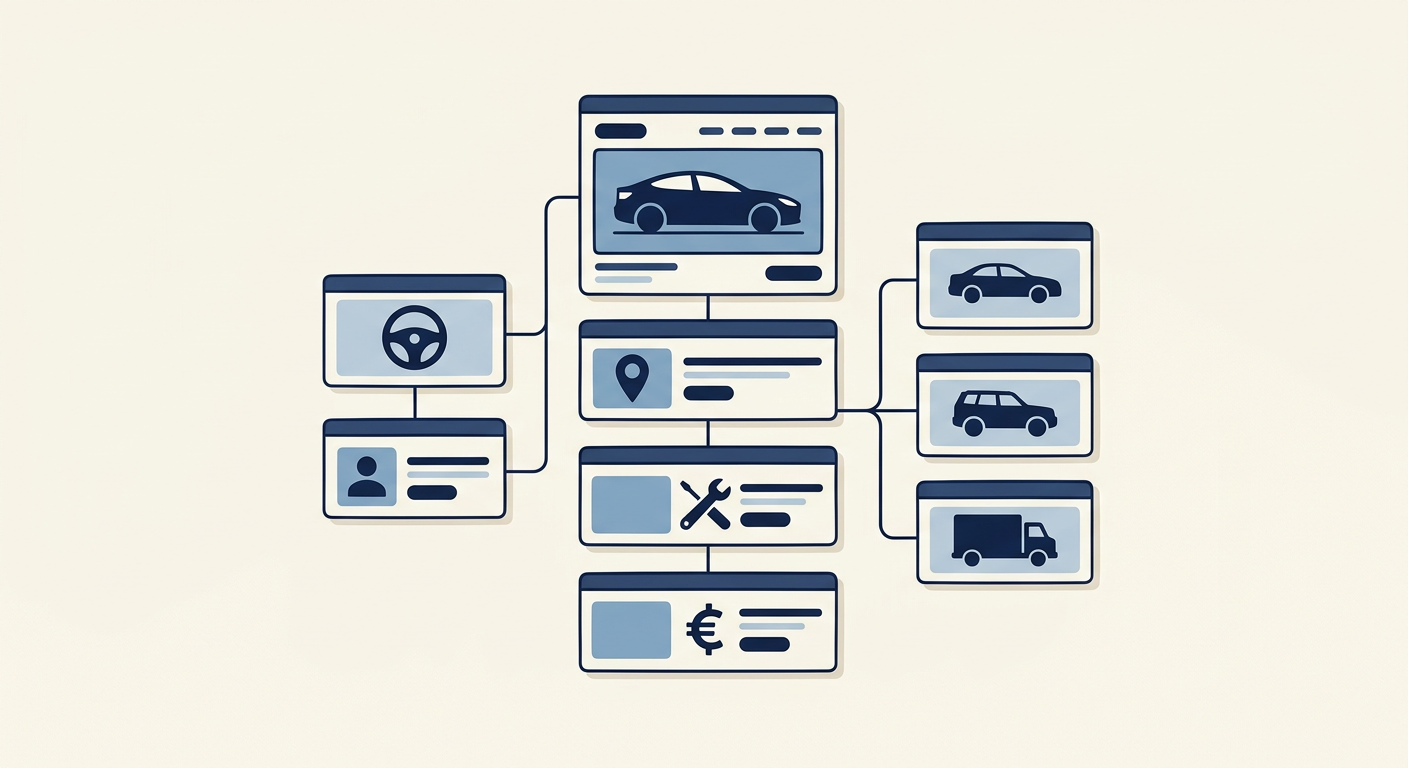
Internal links are one of the fastest dealership SEO wins.
Ranking pages is more about structure than luck.
If Google and shoppers can’t find it, they can’t buy it.
Here’s how to make internal linking do the heavy lifting.
What is internal linking in dealership SEO?
Internal links are hyperlinks that connect pages on your own site. They help search engines understand what matters and help shoppers move toward a decision.
Think of them like roads between inventory, model research, service, finance, and location pages. Better roads mean more traffic to the right places.
If you want a broader game plan for auto stores specifically, start with this overview of Car Dealership SEO.
Why internal links matter for dealership SEO
Crawl and indexation: Internal links give bots a clear path to discover SRPs, VDPs, and long-tail blog posts faster.
Relevance and authority: Consistent links from topic clusters tell Google which pages are your definitive answers. That’s how dealership SEO builds topical depth.
Conversion flow: Helpful links move shoppers from research to inventory, and from service info to booking—without dead ends.
How Google uses links inside your site
Anchor text explains what the target page is about. Clear, descriptive anchors boost relevance for the keyword theme you want that page to rank for.
Site architecture also matters. The fewer clicks from your homepage to an important page, the stronger the signal. Orphan pages rarely rank because nothing points to them.
The pages every dealership should interlink
- SRPs (by make, model, body style) — core shopping paths.
- VDPs — the final decision pages.
- Model guides and comparisons — research content that feeds SRPs.
- Service category pages (brakes, tires, oil) — bookable revenue pages.
- Financing, trade-in, and credit education — pre-visit trust builders.
- About, location, and directions — local signals and usability.
From each of these, point users to the next best step. Blog posts should feed SRPs/VDPs, and service content should route to scheduling or department pages.
Build a hub-and-spoke structure that fits dealers
Hubs are your category pages: brand, model, body type, or service category pages. They should link to every relevant subpage and accept links back from those subpages.
Spokes are supporting posts and landing pages: comparisons, how-tos, FAQs, and accessories. Each spoke links up to the hub and sideways to related spokes.
Use local modifiers across your spokes (city, region, seasonality) so your hub gathers authority for the broader, evergreen theme.
Anchor text that helps, not hurts
Write anchors like labels a shopper would understand. Make them specific, match the target page, and avoid over-optimized repetition.
- Good: "Used Honda CR‑V in Denver" → SRP
- Good: "Schedule brake service" → brake category page
- Good: "2024 Silverado towing guide" → research post
- Risky: "click here" or "learn more" with no context
- Risky: Stuffing the exact same keyword in every link to a page
Vary anchor text naturally, but keep the intent consistent. Ten different ways to say the same thing beats one phrase copied across your site.
Link depth and crawl budget
Aim to keep high-value SRPs, service hubs, and key research posts within three clicks of the homepage.
Use breadcrumbs and on-page modules (e.g., related vehicles, related articles) to surface deep pages without bloating your main navigation.
Navigation, footer, and breadcrumbs: do they count?
Yes, but contextual in-body links carry stronger topical relevance. Google weighs the words near a link, not just the link itself.
Use nav and footer for hubs and must-have links. Use in-body links to explain why the destination matters for the current page.
Internal links for service and fixed ops
Fixed ops content often gets buried under sales pages. Give it a dedicated hub and link to it from relevant research and seasonal posts. See our approach to Fixed Operations SEO.
- "How long do brake pads last?" → brake service hub → schedule service
- "Winter tire vs all-season" → tire hub → tire specials
- "Battery replacement signs" → battery hub → service appointment
Don’t forget parts and body shop. Create simple category pages and route DIY content and accident repair advice into them.
Blog-to-inventory linking that actually helps SEO
Model research and comparisons should point to SRPs and relevant trims, not just the homepage. Here’s how model comparison content supports inventory pages.
Avoid linking to sold VDPs from evergreen posts. Prefer model- or trim-level SRPs and filtered views that stay in stock longer.
- From "Best used SUVs for snow" → AWD SUV SRP, featured AWD models
- From "F‑150 trim levels explained" → F‑150 SRP and popular trims
- From "Boat towing capacity guide" → truck SRP with tow packages
Use a simple internal linking SOP
- Before publishing a post, choose 3–5 target pages: 1 hub + 2–4 SRPs/related articles.
- Add 3–7 contextual links in-body where they naturally help the reader.
- Link upward to the hub, sideways to related content, and forward to conversion pages.
- Add 1–2 links back into this new post from older, related content.
- Revisit top posts quarterly and refresh links to live, in-stock targets.
Most posts only need 5–10 hand-picked links. Quality of the connection beats quantity.
One internal linking model for dealers
| Link type | Primary purpose | Best targets | Notes |
|---|---|---|---|
| Hub → Spoke | Distribute authority | Model guides, comparisons, FAQs | Include a short intro module with 6–10 spoke links |
| Spoke → Hub | Clarify topic, rank hub | Make/model SRP, service category page | Use descriptive anchors matching user intent |
| Spoke → Spoke | Deepen topical coverage | Related research and how-tos | Link only when it truly helps the next question |
| Spoke → Conversion | Move the shopper forward | SRP filters, schedule service, trade-in | Place within or after a helpful section |
| Inventory cross-links | Keep shoppers browsing | Similar models, trims, accessories | Automate but cap at a sensible number |
| Footer/Nav | Ensure discoverability | Hubs, legal, locations | Don’t rely on these for topical relevance |
Use this as a guide, not a rulebook. Relevance to the reader always wins.
Measure impact and iterate
You can’t improve what you don’t measure. Track how internal links affect visibility and conversions across your dealership SEO program.
- Indexed pages and crawl errors (coverage)
- Average position and impressions for hub keywords
- SRP and service hub entrances from blog posts
- Time on page and next-page path from research to SRP/VDP
- Conversion assists from research and service content
Review performance quarterly. Add or prune links when inventory, seasonality, or priorities change.
Common mistakes that cost you traffic
- Orphaned research posts with no links in or out
- Linking "click here" instead of descriptive anchors
- Pointing evergreen posts at sold VDPs
- Overloading the homepage with 100+ links
- Hiding service under a single generic page
- Forgetting to link older winners to new content
Fixing these compounds results. A few smart links on high-traffic pages can lift entire sections of your site.
Scaling internal linking with automation
Manual linking is great, but it doesn’t scale by itself. Use templates and modules to place smart, context-aware links across posts and category pages with Dealership SEO software.
AI can map hubs, suggest anchors, and avoid dead links at scale. See how we operationalize this in AI SEO for car dealerships.
Human review keeps everything accurate, on-brand, and genuinely helpful for shoppers.
Getting started this week
Pick your top five pages by traffic. Add two links from each into the right SRPs or service hubs, and two links from those hubs back to the originals.
- Add related-vehicle modules on your top 10 VDPs
- Add "popular comparisons" to your model hubs
- Refresh anchors on your 10 highest-traffic posts
- Point seasonal service posts to the correct hub and booking
- Prune outdated links to sold or deleted pages
When you’re ready to systemize internal linking alongside fresh content, check our pricing and map it into your weekly workflow.
Final thoughts
Internal linking is leverage. It turns the content you already have into a clearer path for both Google and shoppers—exactly what dealership SEO needs.
Start with hubs and a simple SOP. Keep it human, keep it helpful, and let the wins stack up.
Related resources
- Car Dealership SEO — How to structure pages and content for auto stores.
- Fixed Operations SEO — Build service hubs that convert.
- Dealership SEO Software — Automate content and internal linking workflows.
- AI SEO for Car Dealerships — Use AI to scale topic clusters and links.
- SEO for Car Dealerships: The Content Playbook That Actually Works in 2026 — A modern content plan to power your links.
- Car Dealer SEO: A Practical Guide to Ranking in Your Local Market — Local tactics you can pair with internal linking.
Related articles
Content Quality vs Quantity for Dealership SEO: What Actually Matters?
Should dealerships publish more blog posts or better blog posts? Learn how content quality, consistency, buyer intent, and internal linking all impact dealership SEO results.
Jul 7, 2026 · 8 minDealer SEOWhy Blog Content Still Matters for Car Dealership SEO
Blog content still matters for car dealership SEO when it answers buyer questions, supports inventory pages, and helps dealers appear in Google and AI search.
Jul 4, 2026 · 7 minDealer SEOSEO for Auto Service Shops: How Content Brings in More Service Customers
How automotive SEO services and smart content help auto service shops attract more local repair customers and steady shop bookings.
Sep 6, 2026 · 8 minDealer Blogs plans, writes, and publishes SEO articles that interlink with your SRPs, VDPs, and service hubs. Build authority and conversions without extra busywork.