
Car Dealer SEO: A Practical Guide to Ranking in Your Local Market
A plain-English playbook for car dealer SEO. Learn how to rank locally, publish content that converts, and measure what matters.
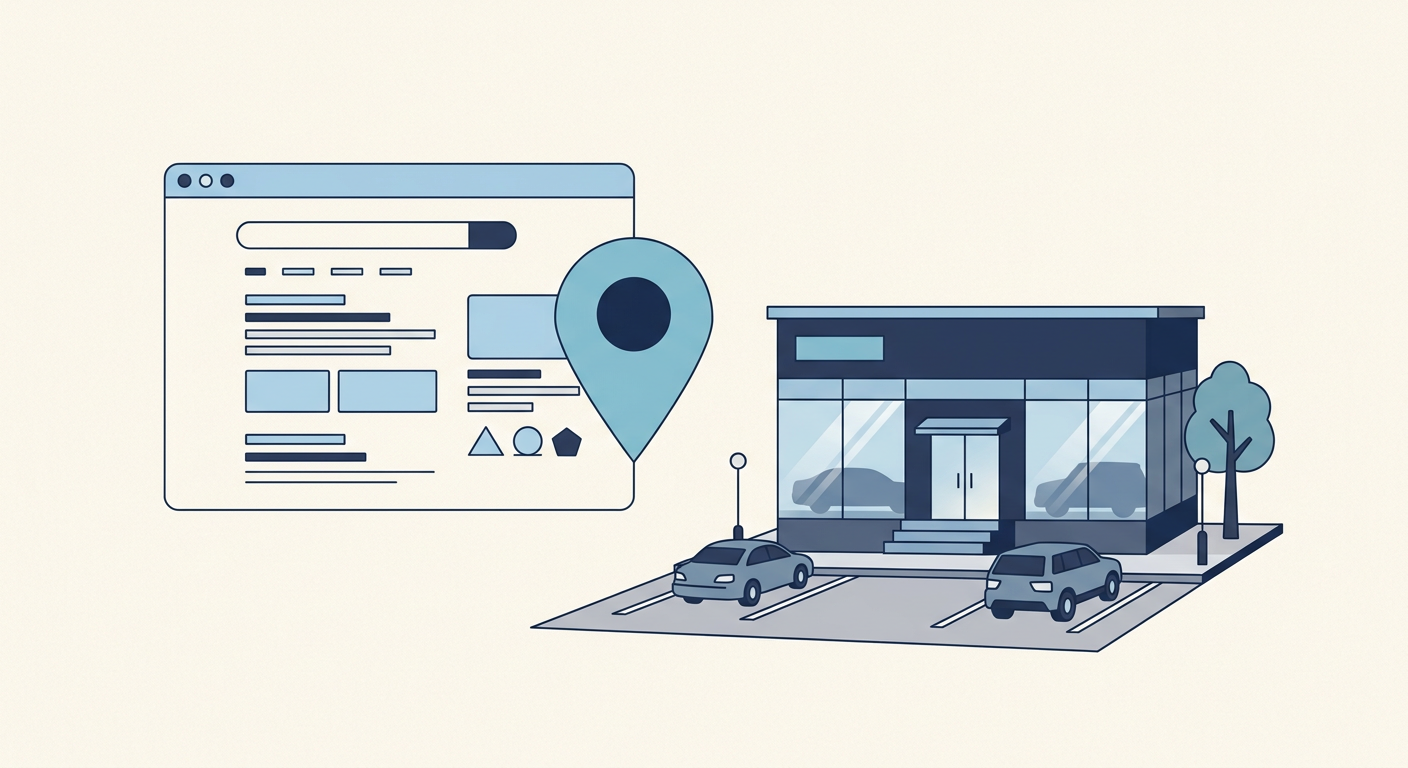
Car dealer SEO is how your store gets found by ready-to-buy shoppers in your city.
If you don’t show up in local search, your inventory and service bays stay quiet.
The good news: you don’t need hacks—just a consistent, focused plan.
Here’s a practical guide to ranking in your local market and turning traffic into leads.
What is car dealer SEO?
Car dealer SEO is the process of improving your website and online presence so local shoppers can find you when they search for vehicles, financing, service, or parts.
It blends three layers: your Google Business Profile visibility (the map pack), organic rankings for your site pages, and content that matches real buyer questions—all pointed at test drives, appraisals, and service appointments.
- Win the map pack for core brand and category queries
- Rank organic pages for local buyer keywords
- Publish educational content that earns clicks and conversions
- Keep improving with data-led updates
Car dealer SEO isn’t one-and-done. It’s a system you run every week. If you want a deeper overview tailored to auto stores, start with the high-level playbook here: Car Dealership SEO.
How local search works for auto dealers
Think in two stacks: the map pack and the organic results. The map pack is driven by proximity, relevance, and prominence. Organic results lean on on-page optimization, content quality, and links.
Your website strengthens both stacks. Accurate NAP (name, address, phone), relevant service areas, and strong reviews boost the map pack. Optimized SRPs, VDPs, and guides win organic clicks.
- Proximity: how close the shopper is to your store
- Relevance: how well your profile and pages match the query
- Prominence: reviews, links, and brand authority
Build your local SEO foundation
Start with the basics. Your Google Business Profile should be complete, consistent, and active.
- Primary category correct (e.g., Car dealer), with supporting categories
- Accurate hours, holiday hours, and services
- High-quality photos, products (models), and posts
- Consistent NAP across website, GBP, and citations
- Service area aligned to where you actually sell and deliver
Mirror that accuracy on your website. Place name, address, and phone in the footer, add embedded maps, and create a clear Contact page.
- Create a strong homepage intro that states brand(s), city, and services
- Add a dedicated location page for each rooftop
- Use local business schema to reinforce details
Keyword strategy for car dealership SEO
Group keywords by intent and funnel stage. Match content types to what shoppers actually want at each step.
- High intent: “new [brand] [city]”, “used cars near me”, “buy [model] [city]”
- Mid intent: “[model] towing capacity”, “SUVs with 3rd row [city]”
- Early research: “lease vs finance pros and cons”, “how to trade in a car”
- Fixed ops: “oil change [city]”, “collision center [city]”
Balance brand and non-brand terms. Brand queries usually convert faster; non-brand queries expand reach and capture in-market shoppers earlier.
- Map primary keywords to core pages (home, SRPs, services)
- Use supportive long-tails for blogs and model guides
- Cover city, suburb, and neighborhood variants where relevant
On-page SEO for inventory, SRPs, and VDPs
Your inventory is your advantage. Treat SRPs and VDPs like landing pages that need clean metadata, structured content, and internal links.
- Titles: include model, body style, and city where sensible
- Meta descriptions: highlight value props and next steps
- H1/H2s: clarify trim, features, and availability
- Internal links: point to finance, trade, and relevant model guides
- Schema: product/vehicle markup where supported
Create evergreen SRPs for high-demand categories (e.g., Used SUVs in [City]) and link to them from the homepage and blogs. Ensure VDPs load fast and show core info above the fold.
Content that converts: blogging for automotive dealer SEO
Blog content fills the gap between inventory searches and decision making. It builds authority, earns links, and keeps you visible when shoppers compare models or financing paths.
Aim for search-led topics with a local angle: model comparisons, towing guides, budget lists, seasonal car care, trade-in education, and finance questions. Consistency beats bursts.
If you don’t have an internal writer, a managed option can keep you publishing on schedule. See what’s included in our car dealership blog service.
You can also use automation to scale research-heavy content without losing quality. Here’s how AI supports strategy and drafts while staying brand-safe: AI SEO for Car Dealerships.
- Comparison: “[Model A] vs [Model B] for families in [City]”
- Research: “Best used AWD cars for snowy winters in [Region]”
- Ownership: “How trade-ins work in [State]”
- Service: “Brake pad replacement timeline in [City]”
Fixed operations: service, parts, and body shop SEO
Fixed ops is a consistent revenue engine and a big local SEO opportunity. Build individual service pages for top jobs, then support them with maintenance guides and FAQ posts.
- One page per service: oil change, brakes, tires, alignment, batteries
- Add model-specific service content for top sellers in your market
- Include pricing disclaimers, what’s included, and appointment CTAs
- Use internal links from blogs to service pages and booking forms
Consider a dedicated collision or body shop page if applicable. Add photos, certifications, and insurer information to improve relevance and trust.
Local links, citations, and E-E-A-T signals
Local authority comes from real-world involvement and clear signals of expertise. Focus on quality over quantity.
- Sponsorships: youth sports, community events, local charities
- Partnerships: auto clubs, tow services, detailers, car shows
- PR: new model launches, facility upgrades, community stories
- Citations: ensure consistent listings across major directories
- On-site E-E-A-T: author bios, about page depth, and trust badges
Ask for reviews after every sale and service. Respond to all reviews—positive and negative—with helpful, human replies. Reviews improve both visibility and conversion.
Technical basics that move the needle
You don’t need a perfect Lighthouse score to win, but you do need a fast, crawlable site.
- Page speed: compress images, lazy-load galleries, reduce scripts
- Indexing: clean up noindex/tag pages, fix orphan pages
- Canonicals: prevent duplicate SRPs and parameter chaos
- Internal linking: connect blogs to SRPs, VDPs, and services
- Sitemaps and robots: keep them accurate and lightweight
- Core Web Vitals: stabilize layout and optimize input delay
Monitor crawl errors and 404s monthly. Keep redirects tidy when you rotate specials or rename categories.
Measure results and optimize
Track what matters: calls, form fills, chats, directions, and booked appointments. Sessions are not sales. Tie goals to revenue actions.
- Map rank tracking to priority keywords in your core ZIPs
- Watch map pack and organic separately
- Review assisted conversions from blogs and guides
- Measure call quality and lead source accuracy
Use a simple scorecard: content published, keyword gains, traffic to SRPs and service pages, and leads by channel. Adjust topics based on what converts.
If you need a consistent publishing engine with built-in tracking, consider an automated workflow built for dealers: Dealership SEO Software.
Quick-win checks each month
- Top 10 landing pages: do titles and H1s match search intent?
- VDP speed: are hero images optimized?
- Internal links: did new blogs link to SRPs, model pages, and service?
- Reviews: did we request them after every RO and sale?
- GBP: are posts, products, and Q&A updated?
In-house vs agency vs software: what fits your store
There’s no one right way to run car dealer SEO. Your choice depends on control, speed, budget, and your team’s time.
If you’re deciding between a traditional agency and automation, this overview can help set expectations: Dealer Blogs vs SEO Agency.
| Option | What you control | Typical cost profile | Speed to publish | Risks/cons | Best fit |
|---|---|---|---|---|---|
| In-house team | Strategy, content, QA | Salaries, training, tools | Variable, depends on capacity | Hard to sustain cadence; turnover | Multi-rooftops with internal marketing |
| SEO agency | Strategy, reporting | Retainer | Moderate | Bottlenecks; generic content | Stores needing full-service guidance |
| Automated software | Strategy + content automation | Subscription | Fast, consistent | Still needs oversight | Dealers focused on consistent content |
Whichever route you choose, make sure you can produce and publish every week. Cadence wins.
A 90-day car dealer SEO action plan
You don’t need to overhaul everything at once. Ship the highest-impact fixes first, then layer in content.
- Weeks 1–2: GBP cleanup, NAP checks, categories, photos, products
- Weeks 3–4: Title/meta refresh for home, SRPs, top service pages
- Weeks 5–6: Publish 4 search-led blog posts and 1 comparison guide
- Weeks 7–8: Create evergreen SRPs (e.g., Used SUVs in [City])
- Weeks 9–10: Build or improve service pages for top-5 jobs
- Weeks 11–12: Local link push (sponsorships/partners) + review drive
Keep a living topic list. Prioritize posts that support your highest-margin categories and seasonal needs.
Tie each task to a metric: rankings, clicks, calls, appointments, and sales sourced. Review results, then repeat the cycle.
Final thoughts
Car dealer SEO rewards consistency. Get the basics right, publish useful content every week, and track the actions that turn into revenue.
If you want a simpler way to keep quality content flowing without hiring writers, explore automation built for dealerships. Compare options, and when you’re ready, a streamlined platform can help you move faster and stay on schedule: Pricing.
Related resources
- Car Dealership SEO — Full overview of how franchise and independent dealers rank locally.
- Car Dealership Blog Service — Managed content program that publishes SEO articles on schedule.
- Dealership SEO Software — Automate topic research, writing, and publishing for your store.
- Fixed Operations SEO — Grow service, parts, and body shop visibility in your market.
- SEO for Car Dealerships: The Content Playbook That Actually Works in 2026 — Step-by-step content blueprint.
- How Educational Content Builds Trust Before a Buyer Contacts Your Store — Why helpful articles increase conversion.
Related articles
SEO for Car Dealerships: The Content Playbook That Actually Works in 2026
A practical 2026 playbook on SEO for car dealerships with a proven content plan, schedules, and KPIs you can run without hiring a big team.
Jul 22, 2026 · 8 minLocal SEODealership Local SEO: The Playbook for Ranking in Your City
A practical playbook for dealership local SEO. Learn how to optimize Google Business Profile, build local content, and win rankings in your city.
Jul 26, 2026 · 8 minDealer SEOSEO for Trailer Dealers: Local Content That Drives Buyer Leads
Practical trailer dealer SEO tactics to publish local content, rank for buyer searches, and turn clicks into calls, form fills, and walk-ins.
Sep 5, 2026 · 8 minDealer Blogs automates search-led topics, writing, and publishing for your store. Stay visible, earn more leads, and measure what matters.