
SEO for Trailer Dealers: Local Content That Drives Buyer Leads
Practical trailer dealer SEO tactics to publish local content, rank for buyer searches, and turn clicks into calls, form fills, and walk-ins.
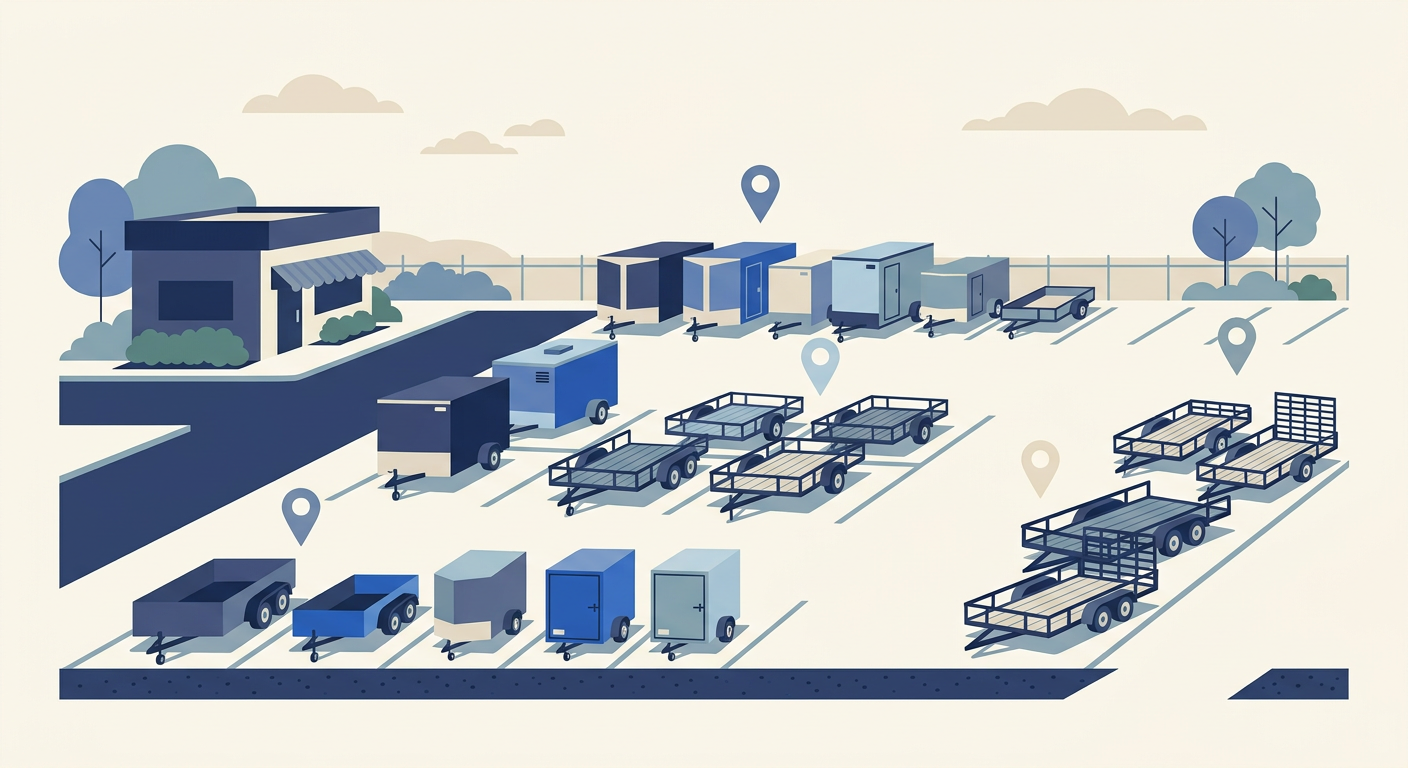
Your buyers search locally before they ever step on the lot.
If your content doesn’t show up for those searches, someone else’s will.
Here’s a practical trailer dealer SEO plan that builds local visibility and drives leads.
Why local content matters for trailer dealer SEO
Trailer shoppers rarely search for generic terms. They search for purpose, size, and distance. That’s why trailer dealer SEO is about matching local intent with clear, useful content.
If you speak to specific jobs, neighborhoods, and timelines, you’ll win clicks from people who are ready to buy or call. That’s the simple foundation of trailer dealer SEO.
Local content also feeds all the places buyers discover you: Google Business Profile, map packs, organic listings, and AI answers. Consistency matters more than perfection.
- Buyers search for use cases (hauling quads, landscaping, roofing, race cars).
- They add size, weight, and features (7x14, tandem axle, brake controller, ramp door).
- They refine by distance and availability (near me, open today, same-week delivery).
What trailer dealer SEO includes
Trailer dealer SEO spans your whole site and profile ecosystem. Think inventory-adjacent content, city and service-area pages, and clear answers to pre-sale questions.
It also includes technical basics: fast pages, structured data on inventory, clean internal linking, and consistent NAP across your site and profiles.
- On-site content: category and model pages, buyer guides, local blogs.
- Off-page: Google Business Profile, citations, and reviews.
- Technical: crawlable nav, schema, image compression, and page speed.
Understand buyers by use case
Trailer shoppers don’t all want the same thing. Organize your SEO content around how people use trailers in your market.
- Contractors: dump, equipment, tilt, and gooseneck needs.
- Homeowners: utility, small enclosed, moving, and yard projects.
- Powersports: ATVs, UTVs, snowmobiles, and dirt bikes.
- Motorsports: car haulers, enclosed race trailers, and tie-down systems.
- Agriculture: livestock, flatbed, and implement hauling.
Meet customers where they start. Write pages that help them choose size, axle, weight rating, flooring, and brake setups for their job.
Capture seasonal intent: spring landscaping, summer powersports, fall moving, and winter snowmobile hauling. Each season opens new angles for pages and posts.
Content ideas that rank for trailer dealer SEO
Build a simple content roadmap. Publish steadily instead of in bursts.
- Category hubs: utility trailers, enclosed trailers, dump trailers, equipment haulers.
- Fitment guides: what a half-ton can tow, GVWR explained, hitch classes.
- Use-case pages: landscaping setups, ATV weekend-haul checklist, contractor packages.
- Local posts: best places to launch a boat with a trailer, city-specific towing rules.
- Service pages: wiring checks, wheel bearings, brake service, inspections.
- Buyer FAQs: open vs enclosed, steel vs aluminum, tandem vs single axle.
- Ownership tips: loading safely, weight distribution, tie-down guides, storage.
Tie content to calls to action. Invite readers to call for sizing help or book a same-week inspection.
City and service-area pages
Ranking for nearby cities is about relevance and usefulness, not copy-paste templates. Each city page needs unique angles and local proof.
Start with the city’s common use cases, distance from your lot, popular routes, and any local towing quirks. Add photos from deliveries and installs where possible.
- Include driving directions and rough travel time from your store.
- Reference neighborhoods or landmarks honestly and sparingly.
- Show service availability (wiring, brakes, inspections) for that area.
- Link to relevant category or buyer-guide pages for depth.
Avoid thin pages. Aim for 400–700 words with real information and a few photos. Update them quarterly if your market changes.
On-page basics for every page
Strong basics compound your efforts. Don’t bury key details.
- Title tag: include trailer type and city.
- H1: focus the page on a single intent.
- Meta description: clear benefit and action.
- URL: short, descriptive, and readable.
- Internal links: point to related categories and guides.
- Images: compress and use descriptive alt text.
- Schema: use Product and LocalBusiness where applicable.
Make contact paths obvious. Use a prominent phone number, a short form, and a map embed when location matters.
Internal linking and authority building
Cluster your content by intent. Link category hubs to buyer guides and back. Link city pages to relevant categories, and guide readers to next steps.
Use simple anchor text that matches user intent: utility trailers, enclosed cargo, dump trailer service. Keep links helpful and natural.
- From: city pages → To: categories and buyer guides.
- From: buyer guides → To: inventory category hubs.
- From: service pages → To: safety and inspection guides.
- From: blogs → To: evergreen guides and contact pages.
Blog publishing cadence and automation
Consistency wins. Two useful posts per month beats ten posts in a single burst. Plan content around buyer-season cycles and update top performers.
Automation can keep cadence without draining your team. Pair a human-approved strategy with tooling that schedules, interlinks, and updates content. Tools like the Dealership SEO Software platform and WordPress dealership blog automation can handle the heavy lifting while you approve topics and edits.
| Approach | Strengths | Trade-offs | Best use |
|---|---|---|---|
| Manual blogging | Full control, tailored voice, deep local nuance | Time-consuming, inconsistent cadence risk | Small teams with in-house marketing bandwidth |
| Automated with Dealer Blogs | Consistent cadence, interlinking, topic coverage mapped to buyer intent | Requires upfront calibration and approvals | Dealers needing predictable publishing and growth |
| Hybrid | Balance of control and scale, strategic human edits on automated drafts | Needs process discipline to avoid bottlenecks | Most trailer dealers aiming for steady SEO momentum |
If you’re weighing tools vs agencies, get clear on outputs, cadence, and accountability. Here’s a direct take on Dealer Blogs vs SEO agency to help you choose a model that fits your team.
Measure and optimize
Track the few metrics that show you’re attracting buyers, not just bots. Map posts and pages to lead actions.
- Organic sessions by page group (categories, guides, city pages).
- Click-through rate on category and city pages.
- Calls, forms, and direction requests from organic traffic.
- Map-pack visibility for top trailer terms.
- Assisted conversions from buyer guides and FAQs.
- Ranking coverage for category and city combinations.
Review quarterly. Keep what’s compounding, improve middling performers, and prune or consolidate truly thin content.
Multi-location and adjacent segments
If you run multiple locations, avoid duplicate content. Share a common structure but localize use cases, directions, examples, and photos. This guide on how multi-location dealerships should approach SEO content outlines a practical framework.
Adjacent segments like powersports or equipment hauling can expand reach, but treat them as distinct clusters with their own guides and local pages. Don’t force everything into one catch-all page.
- Build unique city pages per store, not per brand.
- Centralize content standards; localize examples.
- Track leads per location; align content with inventory.
- Use consistent NAP and hours across profiles.
Real-world page templates that work
Use repeatable page types. They’re easier to scale and measure.
- Category hub: Enclosed Cargo Trailers in [City] — sizes, features, FAQs.
- Buyer guide: What Size Utility Trailer Do You Need in [City]?
- Service: Trailer Wiring and Brake Service in [City].
- City page: Utility and Enclosed Trailers Near [City].
- Comparison: Steel vs Aluminum Trailers for Contractors in [City].
Each template needs unique intro, localized proof, and clear next steps. Avoid spinning the same copy with swapped city names.
FAQ topics that reduce friction
Good FAQs turn research into action. Keep answers short and link to deeper guides.
- Can a half-ton tow a 7x14 enclosed trailer?
- Do I need trailer brakes for my setup?
- What’s the difference between GVWR and payload?
- How do I choose between single and tandem axles?
- What maintenance should I do before a long trip?
- What tie-down points and E-track layouts work best?
Add one or two FAQs to category pages. Put longer sets on a dedicated guide page and interlink.
From blog post to lead
Every post should lead somewhere. After educating, invite the reader to act.
- Primary: call or request a quote.
- Secondary: visit the lot or book a service check.
- Tertiary: read a related guide or compare categories.
Use short, honest CTAs. Avoid generic “contact us” alone. Pair with next-best content links.
Keep photos simple and helpful
Photos sell trust. Show real inventory, common tie-down setups, ramp doors, lighting, and brake controllers installed.
Avoid heavy filters and oversized files. Compress images and keep alt text descriptive and literal.
Build authority with proof
Local proof is a ranking and conversion asset. Show short examples.
- Delivered a 7x16 enclosed trailer to a roofing crew in [City].
- Set up E-track and spare mount for a motorsports customer.
- Repacked wheel bearings and adjusted brakes on a contractor’s dump trailer.
- Installed a brake controller and tested wiring for a homeowner move.
Keep proof statements factual. Photos help without overdoing it.
Reduce thin pages and duplication
Thin, near-duplicate pages can hold you back. Consolidate similar posts into stronger guides and redirect the rest.
If two pages aim at the same query, combine them. Keep the better URL and move the best paragraphs over.
Speed and mobile usability
Most trailer shoppers are on mobile while planning or on site. Fast pages win.
Compress images, lazy-load galleries, and avoid heavy scripts. Keep forms short. Make phone tap targets large.
Turn service into SEO assets
Service pages can pull in buyers too. People search for wiring, brakes, inspections, and axle upgrades.
Write simple explanations, list what’s included, and show clear next steps. Link to related safety and loading guides.
Update top performers
Your best pages deserve quarterly tune-ups. Add fresh photos, clarify specs, and embed new internal links to recently published content.
Small refreshes can maintain rankings and keep conversion rates up when competitors publish new content.
Plan a 90-day sprint
Focus beats busywork. Ship a few pages that matter over a 90-day window.
- Month 1: two category hubs, one buyer guide, one city page.
- Month 2: one service page, one comparison guide, one local post.
- Month 3: one FAQ hub, one city page, update two top performers.
Use a shared doc to track topics, URLs, and internal links. Review leads by page each month.
Tie blogs to inventory categories
Don’t let blogs float alone. Link each post to the right category hub and vice versa. Add one or two relevant inventory calls to action.
If categories change, update links. Keep the path from research to inquiry frictionless.
Align content with seasonality
Plan out the year. Map your posts and pages to what buyers actually do month by month.
- Spring: landscaping, utility trailer maintenance, wiring checks.
- Summer: powersports hauling, enclosed ventilation tips.
- Fall: moving and storage, brake checks.
- Winter: snowmobile trailers, cold-weather loading safety.
Update seasonal guides annually with new photos and small edits.
Final thoughts
Trailer dealer SEO is about steady, local, useful content that matches how real buyers search. Organize by use case, publish consistently, and make every page lead to a next step.
If you want a reliable cadence without adding headcount, we can help. See plans and get a sample publishing roadmap on our pricing page.
Related resources
- Trailer Dealer SEO — Deep dive on local content for trailer and utility dealers.
- Dealership SEO Software — See how automated content keeps your cadence steady.
- WordPress Dealership Blog Automation — Useful if your site runs on WordPress.
- Dealer Blogs vs SEO Agency — Understand trade-offs before you choose a partner.
- SEO for Heavy Equipment Dealers: How to Rank for Local Buyer Searches — Adjacent segment lessons that apply to trailer SEO.
- Dealership SEO Pricing — Compare options and pick a plan that fits.
Related articles
SEO for Heavy Equipment Dealers: How to Rank for Local Buyer Searches
A practical heavy equipment dealer SEO plan to rank for contractor, farm, and municipal searches in your market.
Aug 20, 2026 · 8 minDealer SEOSEO for Auto Service Shops: How Content Brings in More Service Customers
How automotive SEO services and smart content help auto service shops attract more local repair customers and steady shop bookings.
Sep 6, 2026 · 8 minDealer SEOContent Quality vs Quantity for Dealership SEO: What Actually Matters?
Should dealerships publish more blog posts or better blog posts? Learn how content quality, consistency, buyer intent, and internal linking all impact dealership SEO results.
Jul 7, 2026 · 8 minDealer Blogs automates topic planning, drafting, and interlinking for dealers. Approve, customize, and publish consistent SEO content without adding headcount.