
How to Make Vehicle Detail Pages More Useful for Search
Turn your VDPs into pages that rank and convert. Practical steps to make vehicle detail pages more useful for search and shoppers.
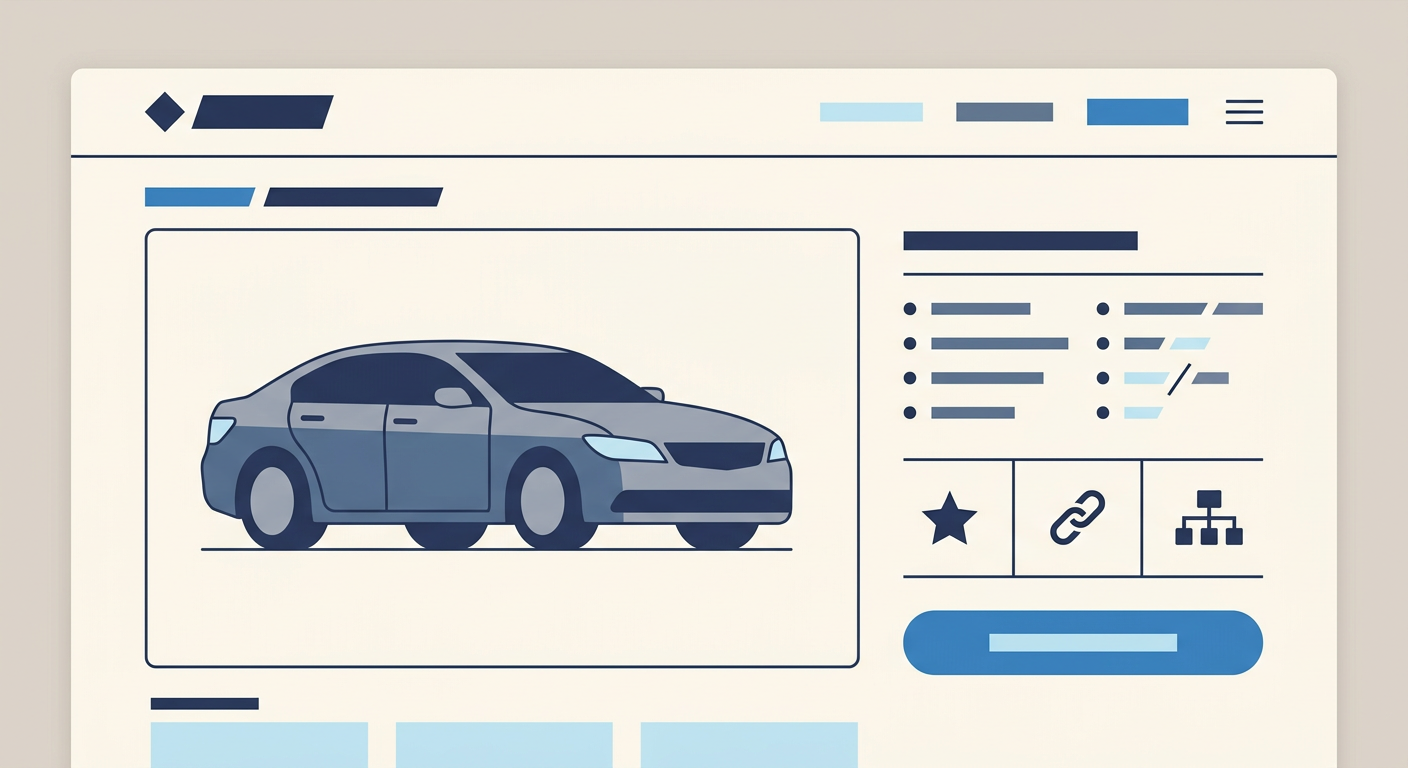
Your VDPs do most of the selling.
They’re also where search engines decide if you deserve to rank.
Make them more useful for shoppers and algorithms, and you’ll see more leads.
Here’s how to tune VDPs for car dealership search engine optimization without bloating the page.
Why VDPs drive SEO results
Every query about a specific vehicle lands here: make/model, trim, color, miles, and local availability.
When VDPs answer those details clearly, they earn clicks, time on page, and inquiries—strong behavioral signals for search.
Optimized VDPs strengthen your topical authority and support broader car dealership search engine optimization across your site.
Start with the query: what buyers want on a VDP
Search intent is simple: confirm the vehicle fits, see proof, and learn what to do next.
Design and content should make that path obvious in seconds.
- Clear title with year/make/model/trim and key differentiator (miles, drivetrain)
- Real photos and a quick condition summary
- Price context, availability, and call-to-action choices
- Specs and options explained in plain English
- Location, delivery options, and contact routes
Unique content beats duplicates
If your VDP text blocks are the same across every unit, they’re thin. Thin content struggles to rank and convert.
Add small, unique touches: condition highlights, option notes, vehicle history insights, and why this unit is notable.
If you’re reusing OEM text everywhere, you’re competing with the same copy as everyone else. Learn why that’s a problem in Why Duplicate OEM Content Can Hurt Dealership Visibility.
Structure the VDP above the fold
Shoppers decide in 5–8 seconds if they’ll scroll.
Make the first screen answer the big questions and show a clear next step.
- Prominent title and key badges (Certified, One-Owner, Local Trade)
- Primary photo angle, swipe or gallery hint
- Price context or “Get ePrice” route
- CTA cluster: Call, Text, Check Availability, Book a Test Drive
- Micro-proof: rating stars, count of recent reviews
Deep specs without bloat
Specs should help shoppers confirm fit quickly, not overwhelm them.
Group features by what buyers actually compare.
- Performance: engine, horsepower, drivetrain
- Efficiency: EPA ratings or general fuel economy category
- Size/utility: cargo, towing (with sources if applicable), seating
- Comfort/tech: key packages and standout options
- Safety: notable assists and ratings if available
Packages and options in plain English
Package names alone don’t help shoppers.
Explain what changes in the driver’s experience when that package is included.
- “Convenience Package” → remote start, power liftgate, wireless charging
- “Safety Suite” → blind-spot warning, lane keep assist, rear cross-traffic alert
- “Tow Prep” → factory hitch, wiring, cooling enhancements (if equipped)
Trust signals that reduce friction
Trust fuels conversions and time on page, which indirectly helps rankings.
Place social proof and store policies where they calm the buyer’s risk.
- Review stars with recent counts
- Limited-time return/exchange policy summaries
- Warranty or certified program highlights
- Vehicle history badges and service records callouts
- Local delivery or test drive options
Media that sells and ranks
Photos and video are content. They can also improve crawlability and engagement.
Name images descriptively and show the details shoppers zoom in on.
- 30–50 photos for used, 10–20 for new with key angles
- Interior tech close-ups: infotainment, driver display, seats
- Wear-and-tear honesty shots for used units
- 30–90 second walkaround videos with captions
- Alt text that reflects the image and trim (no stuffing)
Helpful tools on the page
Interactive elements keep shoppers engaged and moving forward.
Make them fast, optional, and privacy-conscious.
- Payment range estimators and trade-in forms (no hard gates)
- Soft credit check routes with clear disclosures
- Appointment scheduler and “Hold This Vehicle” request
- Save/compare features that don’t require an account
- Smart chat that references the specific VIN automatically
Technical basics: speed, schema, accessibility
Technical polish helps both users and crawlers.
Treat these as table stakes for ranking and conversion.
- Core Web Vitals: compress images, defer non-critical scripts, pre-load key assets
- Structured data: Vehicle, Product, AggregateRating, FAQPage where applicable
- Unique canonical URLs per VIN
- Descriptive titles and meta descriptions per vehicle
- Contrast, keyboard navigation, and labeled controls for accessibility
Internal linking that supports VDPs
VDPs shouldn’t be islands. They need context from category, blog, and location content.
Use internal links to connect models, trims, and buyer questions to the right VDPs.
See practical patterns in How to Connect Blog Content to Vehicle Detail Pages.
Local SEO cues on every VDP
Even when shoppers start national, they finish local.
Confirm your market coverage and logistics without clutter.
- City and neighborhood references where accurate (within reason)
- Store address and service area context near CTAs
- Clear pickup, delivery, and transfer options
- Embedded map on the template footer (not blocking LCP)
FAQs that answer real questions
FAQs boost relevance, catch long-tail queries, and earn rich results with proper schema.
Write them in a way a person would actually ask.
- Can I reserve this vehicle online?
- What’s included in your inspection process?
- Will you deliver to [city/area]?
- Is this model eligible for a certified program?
- Can I see the full service history or reconditioning report?
Avoid thin copy and cannibalization
Two problems hurt VDP performance: not enough substance and too many pages competing for the same queries.
Right-size the copy and differentiate similar units clearly.
If your site repeats generic boilerplate across hundreds of pages, start here: How to Avoid Thin Content on Dealership Websites.
Comparison: default VDP vs optimized VDP
| Element | Default VDP | Optimized VDP |
|---|---|---|
| Headline | Year Make Model only | Year Make Model Trim + key differentiator |
| Media | 8–12 photos, no video | 30–50 photos, walkaround video, alt text |
| Copy | OEM boilerplate | Unique highlights, condition notes, package benefits |
| Specs | Long, ungrouped list | Grouped tabs by buyer priorities |
| Trust | Generic badges | Reviews, policies, history/inspection summary |
| Tools | Heavy gates | Light, fast estimators and schedulers |
| Schema | Minimal | Vehicle/Product, Ratings, FAQPage |
| Links | Isolated | Connected to blog, category, and location pages |
| Performance | Slow, script-heavy | Compressed, deferred, passes Core Web Vitals |
Titles, metas, and headers that match intent
Titles and H1s should reflect what makes this VIN special.
Meta descriptions earn the click with benefits and a clear next step.
- Title: “2021 Honda CR‑V EX-L AWD – One-Owner, Low Miles”
- H1 mirrors title; add city in a subheading or body
- Meta: “Leather, AWD, Apple CarPlay. View 45 photos, video walkaround, and inspection highlights. Reserve online today.”
Write scannable highlights, then detail below
Use a 3–5 bullet “Why this vehicle?” summary near the top.
Then expand into detailed sections below the fold.
- One-owner local trade with full service history
- EX-L adds leather, power tailgate, and driver aids
- New tires and brakes; detailed inspection report available
Used vs new: what changes on the page
New VDPs need package/trim clarity and delivery timelines; used VDPs need condition and history clarity.
The core framework stays the same: proof, fit, and next steps.
- New: factory packages, ETA transparency, dealer-installed options
- Used: reconditioning notes, cosmetic transparency, warranty eligibility
- Both: media depth, trust, supportive links, and fast load
Image and video naming that helps search
Search engines read file names and alt text to understand media.
Make both unique to the VIN and trim.
- 2021-honda-crv-exl-awd-front-three-quarter.jpg
- 2021-honda-crv-exl-awd-infotaiment-closeup.jpg
- Alt: “2021 Honda CR‑V EX‑L AWD front three‑quarter exterior”
Reconditioning notes that build confidence
A short reconditioning summary improves trust and reduces objections.
Keep it factual and simple.
- 125-point inspection completed 05/2026
- New front brake pads/rotors at 52,100 miles
- 4 matching all-season tires installed; alignment completed
Accessibility details that also help SEO
Descriptive buttons, readable contrast, and logical heading order help users and crawlers.
These are easy wins that reduce bounce.
- Buttons: “Call Sales,” “Check Availability,” “Book Test Drive”
- Form labels for screen readers
- H2/H3 hierarchy that mirrors page sections
Cross-link with intent, not clutter
Link to related trims, body styles, and buyer guides when helpful, not everywhere.
Move links into expandable sections to maintain focus.
- “Compare EX vs EX-L” internal article
- “Best SUVs for winter driving in [city]” guide
- “How AWD works” explainer
Content templates that scale without sameness
Build a template that enforces the framework, then inject VIN-specific details automatically.
This keeps quality high and production fast across inventory.
- Dynamic headline and media blocks
- VIN-specific highlights, packages, and condition tags
- Optional FAQ and review widgets per store
Support VDPs with blog and location content
Category and blog pages create pathways to your VINs and capture research queries.
This content reinforces your car dealership search engine optimization beyond VDPs alone.
For a full strategy, see Car Dealership SEO and how location content supports inventory.
How Dealer Blogs fits into your VDP strategy
You don’t need to rewrite every VDP by hand. You do need supportive content that drives the right traffic to them.
Our platform publishes model, trim, and location articles that funnel shoppers to your VINs.
See how the platform works in Dealership SEO Software and how it complements in-house efforts.
Use AI to scale supportive content safely
AI can accelerate topic coverage when guided by a dealership-specific strategy and QA.
The goal is quality, not volume for its own sake.
Learn our approach in AI SEO for Car Dealerships, including prompts, guardrails, and human review.
Managed help when you’re busy
If you’d rather hand off planning and publishing, we offer a fully managed option.
It’s built for teams who want the outcomes without running the playbook.
Explore the Car Dealership Blog Service for a done-for-you plan tied to inventory goals.
Measure, test, iterate
Treat VDPs like living products. Small changes compound.
Track what moves both search and conversion.
- Click-through rate from SRPs and Google
- Scroll depth to key sections
- Form starts and secondary actions (click-to-call, text, save)
- Media interactions: photo swipes, video plays
- Time to interactive and largest contentful paint
When and where to include secondary CTAs
Don’t bury the primary path, but keep alternatives handy for different buyer comfort levels.
A sidebar or sticky footer can host softer options.
- Share/Save Vehicle
- Watchlist/Price Alerts (email or SMS opt-in)
- Request Photos/Video of Specific Areas
Governance: keep details accurate
Accuracy is a ranking and conversion issue.
Automate checks and empower staff to fix issues quickly.
- Price and mileage sync alerts
- Missing photo and duplicate content flags
- VIN-level schema validation
Tie improvements to revenue, not vanity
SEO metrics matter, but signed deals matter more.
Attribute by tracking pre-lead actions and store visits from VDP sessions.
- Compare conversion rate by VDP template version
- Track calls and texts sourced from VDPs
- Measure hold requests and appointments set
Final prep: launch checklist
Run this list before rolling a new VDP template or updates to production.
- Passes CWV on mobile
- 45+ unique photos on used units; video present
- VIN-specific highlights and reconditioning notes
- Schema validates with no critical errors
- Internal links from relevant blog and category pages present
Pricing and planning next steps
If you’re mapping out the calendar for supportive content that feeds your VDPs, pick an approach that matches capacity and goals.
Compare plans and timelines on our Pricing page, and reach out if you want help prioritizing high-impact topics.
Final thoughts
Great VDPs make decisions easy. Great supporting content makes sure the right shoppers find them.
Tighten your template, add useful context, and connect VDPs to the research paths buyers follow.
That’s how you turn car dealership search engine optimization into real showroom traffic.
Related resources
- Car Dealership SEO — See how model and location content supports your VDPs.
- Dealership SEO Software — Automate supportive content that funnels to inventory.
- Car Dealership Blog Service — Fully managed publishing tied to sales goals.
- How to Connect Blog Content to Vehicle Detail Pages — Practical internal linking examples.
- How to Avoid Thin Content on Dealership Websites — Fix copy that holds rankings back.
Related articles
How to Connect Blog Content to Vehicle Detail Pages
Turn your blog into a VDP traffic engine. See how to connect content to inventory pages with practical SEO for car dealerships that moves shoppers deeper into your funnel.
Aug 4, 2026 · 8 minDealer SEOSEO for Marine Dealers: How Boat Buyers Search Online
Understand how boat shoppers search and build a marine dealer SEO plan that captures local demand and drives qualified leads from search.
Sep 4, 2026 · 8 minDealer SEONew vs Used Vehicle Content: Why It Works for Dealership SEO
See why blending new and used vehicle content attracts local shoppers and improves conversions, with a practical plan for car dealership SEO.
Jul 23, 2026 · 8 minDealer Blogs plans, writes, and publishes SEO articles that drive the right shoppers to your inventory pages—automatically and at scale.