
How to Find Blog Topics That Attract Real Vehicle Shoppers
Learn how to find and validate blog ideas for car dealerships that attract real buyers, boost local SEO, and turn searchers into showroom visits.
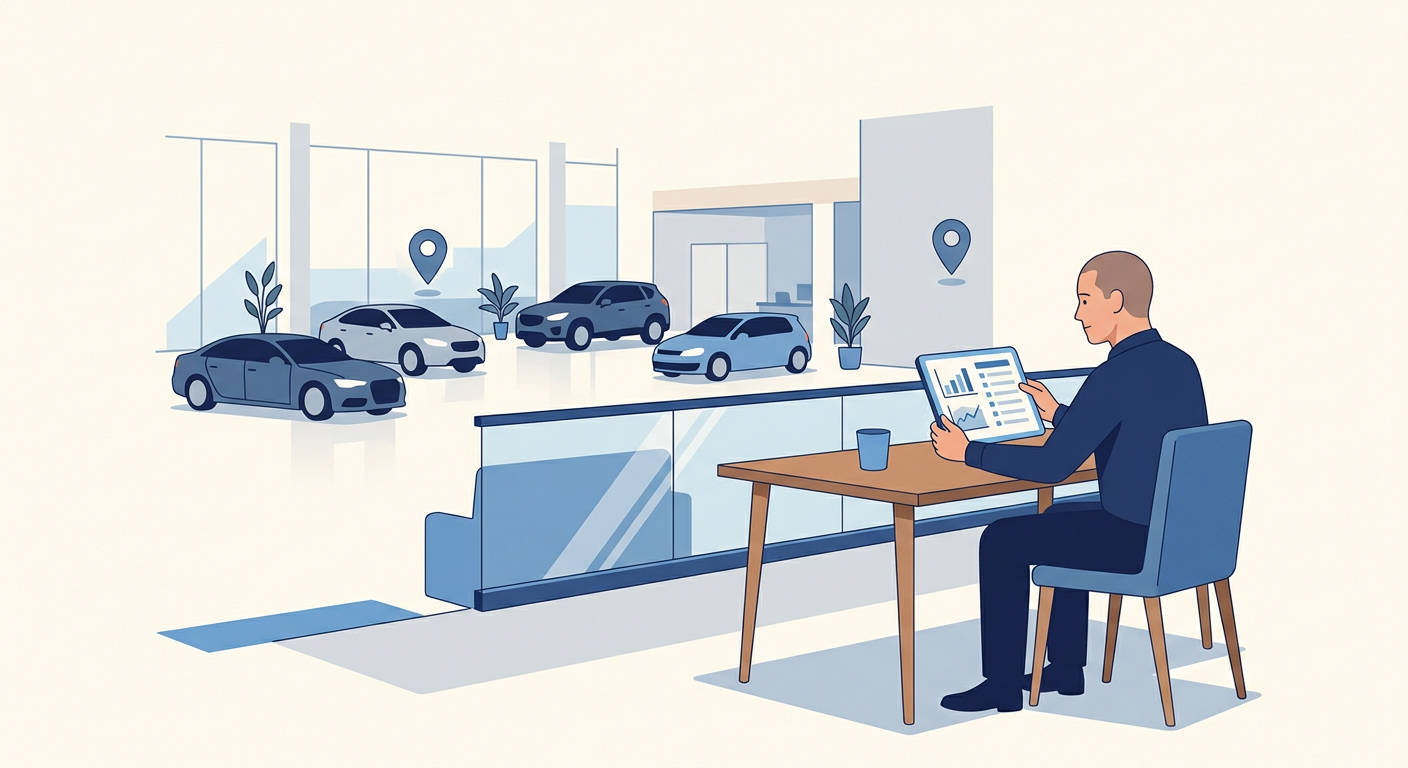
Looking for blog ideas for car dealerships that attract real shoppers?
Running a blog but not seeing buyers in the showroom?
You need topics built from local search intent, not guesswork.
Use this plan to find, validate, and publish posts that convert.
What makes a blog topic attract buyers?
Great topics solve a problem for a specific shopper, in a specific place, at a specific time.
They align with how people actually search, not what we hope they search.
And they move readers to a next step: call, form, visit, or share.
- Clear intent: answers a real question from a shopper
- Local relevance: mentions your city, roads, weather, laws, or events
- Specificity: focuses on one tight angle instead of a broad encyclopedia
- Action path: offers a logical CTA like schedule a test drive, check availability, or contact sales
- Credibility: pulls from your team’s real expertise and data
Start with intent: map searches to your funnel
Every topic should match a buyer stage: problem-aware, solution-aware, or ready-to-buy.
Build your calendar around a mix of intents so you attract traffic across the journey.
- Awareness (early): “best commuter cars for snow in [City]”
- Consideration (mid): “Honda CR-V vs Toyota RAV4 cargo space comparison”
- Transactional (late): “used trucks under $25k near [City]”
- Ownership (post-sale): “oil change interval for [Model] in cold climates”
Core categories of blog ideas for car dealerships
You don’t need endless creativity. You need repeatable categories that work.
Use these as lanes for planning and measurement.
- Model comparisons: “[Model A] vs [Model B] for towing in [Region]”
- Trim explainers: “Which [Model] trim is right for families?”
- Buyer guides: “First-time buyer checklist in [State]: taxes, title, insurance”
- Payment and budget education: “How to estimate out-the-door price in [City]”
- Lifestyle fit: “Best SUVs for three car seats”
- Local driving: “Steep hills in [City]: brake and transmission tips”
- Seasonal prep: “Winter tire guide for [City] commuters”
- Feature deep dives: “AWD vs 4WD explained for mountain roads”
- EV education: “Public charging in [City]: where and how long it takes”
- Trade-in and selling: “How to get your vehicle ready for appraisal”
- Service FAQs: “Check engine light: common causes and next steps”
- Ownership costs: “Fuel, maintenance, and insurance estimates by segment”
Local SEO topics buyers actually search
National advice is noisy. Local content wins because it’s useful right now.
Tie your post to roads, weather, commute patterns, and regulations in your market.
- “Best cars for pothole-heavy roads in [City]”
- “Where to charge an EV in [Neighborhood]”
- “How [State] sales tax affects your next vehicle purchase”
- “Weekend road trips under 2 hours from [City] and what to drive”
- “Parking tips for downtown [City]: size and clearance considerations”
- “How winter salt impacts rust prevention in [Region]”
Inventory-adjacent topics without promising specific stock
You can capture purchase intent even if you’re not listing exact vehicles in a blog.
Aim the topic at purchase decisions that happen before the VIN search.
- “Full-size vs midsize trucks: bed length and garage fit guide”
- “Three-row SUV cargo test: strollers, coolers, and bikes”
- “Best tow vehicles for small boats in [Region]”
- “Certified vs used: what’s inspected and what’s covered”
- “How to read a vehicle history report: red flags and green lights”
- “New vs used vs lease: which path fits your mileage and budget?”
Service and ownership content that brings them back
Service content keeps your brand top-of-mind and supports SEO all year.
It also creates natural internal links from purchase guides to maintenance guides.
- Factory maintenance schedule explained by mileage
- Seasonal checklists for [City] weather
- DIY safety: what you can do vs what a shop should do
- Tire basics: rotation, tread depth, and alignment in plain English
- Battery care in extreme heat or cold
- Warranty and extended coverage FAQs, in simple terms
Seasonal and event-based posts for timely traffic
Plan around weather, school schedules, tax season, and local events.
Publish 3-4 weeks before the need peaks.
- “Winter driving prep for [City]: tires, fluids, and visibility”
- “Back-to-school car safety checks for teen drivers”
- “Spring detailing checklist after road salt season”
- “[City] boat ramp season: tow rating and trailer brake basics”
- “Holiday travel packing: cargo hacks for small SUVs”
Data sources to mine for blog ideas for car dealerships
You don’t have to guess. The data exists in your tools and your store.
Collect ideas weekly, prioritize monthly.
- Google Search Console: queries and pages with rising impressions
- Google Trends: seasonal curves for models and features
- People Also Ask boxes and related searches on Google
- Your CRM and chat transcripts: repeat questions from shoppers
- Service advisor notebooks: real problems and phrasing
- Sales team standups: friction points in test drives
- Reddit, Facebook groups, and Nextdoor: local concerns
- Manufacturer press sites: upcoming features to explain in plain English
- Competitor gaps: topics they rank for but don’t answer well
How to validate a topic before you write
A good idea is not enough. Validate it fast so you spend time only on winners.
Use a simple scorecard: search demand, difficulty, local angle, and business value.
- Check search demand: rough volume via keyword tools or GSC impressions
- Gauge difficulty: look at the top results and their depth
- Ensure a local hook: roads, weather, laws, or landmarks
- Confirm business value: tie to a model, service, or high-intent query
- Plan a unique asset: photos, expert quotes, charts, or checklists
- Write the CTA: what’s the next step this post should drive?
Evergreen vs trending: which to prioritize
You need both. Evergreen compounding traffic plus trending spikes makes a resilient calendar.
| Topic Type | Pros | Cons | Best Uses | Refresh Cycle |
|---|---|---|---|---|
| Evergreen | Compounds traffic; stable intent; builds authority | Slower to rank; requires depth | Maintenance guides, feature explainers, comparisons | Review every 6-12 months |
| Trending | Fast spikes; captures news interest | Short lifespan; more competition | New model releases, feature updates | Review every 1-2 months |
| Seasonal | Predictable demand; easy to plan | Quiet off-season | Winter prep, summer towing, back-to-school | Update 2-4 weeks pre-season |
| Local Events | High engagement; community relevance | Hyper-local; brief window | Road closures, charity drives, weather alerts | Update as details change |
Balance your calendar so at least 60-70% is evergreen, with the rest split between seasonal and timely posts based on your market.
On-page SEO checklist for dealership blogs
Strong topics still need clean execution. Don’t leave rankings on the table.
Run each post through this quick checklist before publishing.
- Title tag: includes the main keyword and your city when relevant
- H1 and H2s: mirror intent; include synonyms and related terms
- Intro: restates the problem in plain English and sets expectations
- Internal links: connect to inventory pages, service, and related blogs
- External references: cite sources for specs or laws
- Images: original photos where possible; add descriptive alt text
- FAQs: answer People Also Ask questions succinctly
- Local signals: city, neighborhoods, roads, and weather where relevant
- Schema: Article and FAQ where appropriate
- CTAs: clear, compliant invites to call, schedule, or contact
- Last updated: timestamp changes when you refresh
Measure results and double down
Post-publish, watch leading indicators first (rankings, impressions), then lagging ones (clicks, conversions).
Use what works to shape next month’s topics.
- Rankings: track target queries weekly for 4-6 weeks
- Impressions and clicks: compare to similar posts in Search Console
- Engagement: time on page, scroll depth, and bounce
- Assisted conversions: form starts, calls, and route clicks from blog pages
- Internal link flow: are readers moving to inventory or service pages?
- Update winners: add FAQs, images, and internal links to boost further
- Prune or merge underperformers after 90 days with low traction
Set a sustainable cadence. One high-quality post per week beats three thin posts per month. Bundle tasks: research on Monday, outline Tuesday, draft Wednesday, edit Thursday, publish Friday.
Final thoughts
You don’t need more ideas. You need the right ones, validated by data and shaped for local intent.
Build around buyer questions, publish consistently, measure tightly, and let compounding traffic do the heavy lifting.
Suggested internal links for this article
- How to Build a Dealership Content Calendar
- On-Page SEO Checklist for Dealer Websites
- Turning Service FAQs into High-Intent Blog Posts
- Local SEO Basics for Auto, RV, and Powersports Dealers
- Writing Comparison Posts That Convert Shoppers
- How to Measure Blog ROI on a Dealership Website
Related resources
Related articles
What Blog Topics Should US Car Dealerships Write About to Attract In-Market Buyers
Turn your blog into a lead engine. Here are the car dealership blog topics that attract in-market buyers and convert local searches into test drives and inquiries.
Sep 2, 2026 · 8 minContent StrategyThe Best Blog Topics for Used Car Dealerships
Practical car dealership blog ideas that drive organic traffic and leads for used car dealers. Topic lists, examples, and a simple plan to publish consistently.
Jul 19, 2026 · 8 minContent StrategyWhy Financing Questions Make Great Dealership Blog Topics
Finance questions are the pain points shoppers search. Turn them into traffic, trust, and leads with a simple auto dealer content strategy.
Jul 14, 2026 · 8 minDealer Blogs researches, writes, and publishes SEO articles to your site every month—built around local intent and your inventory mix. Stay visible, consistent, and compliant.