
Automotive Local SEO: How Dealerships Win Nearby Car Shoppers
Practical automotive local SEO tactics to win map pack visibility, capture “near me” car searches, and turn local intent into leads and showroom visits.
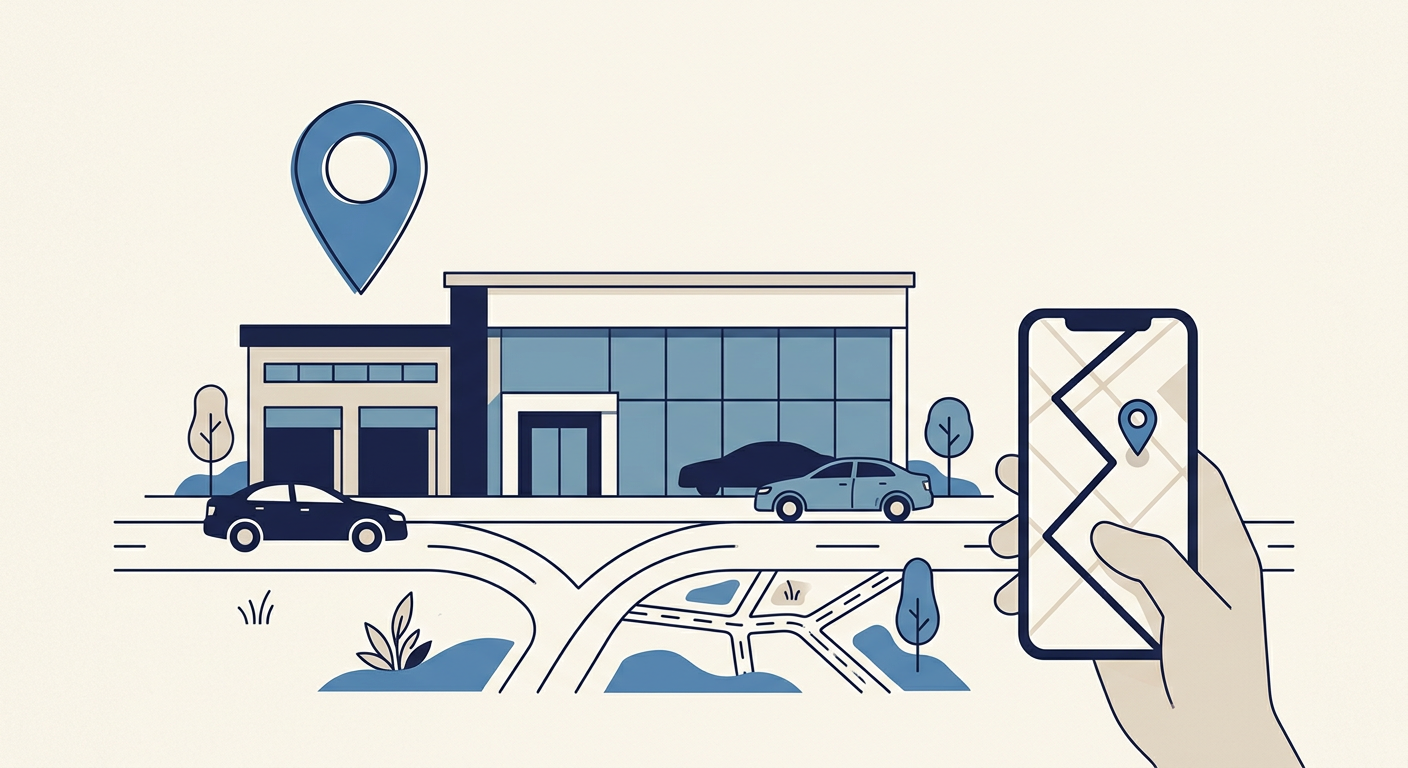
Your store doesn’t need more traffic. You need more local buyers who can show up this week.
That’s why automotive local SEO matters. It puts your dealership in front of shoppers searching right now, nearby.
Win the map pack. Own the “near me” queries. Turn intent into appointments.
Here’s how to make local search a dependable lead source without guesswork.
What automotive local SEO really means
Automotive local SEO is everything you do to help your dealership show up for location-based searches—especially in the map pack and organic results—for sales, service, parts, and trade-in.
It’s not just keywords. It’s accurate data, optimized profiles, geo-targeted pages, reviews, and content that proves you’re the best local answer for a shopper’s problem.
If you’re new to this, start with fundamentals. See how a structured approach to Car Dealership SEO ties your website, Google Business Profile, and content together.
Why local intent beats broad traffic
Broad national traffic can look impressive in analytics, but it rarely converts like local intent.
Shoppers using “near me” and city-based terms are signaling readiness: they want directions, inventory, pricing ranges, hours, and a fast way to contact you.
By aligning pages, profiles, and content to neighborhood, city, and service-area language, you’ll capture higher-quality visits and faster conversions.
Optimize your Google Business Profile for dealership local search
Your Google Business Profile (GBP) is often the first impression. Treat it like a mini website built to convert.
- Use the exact business name (no keyword stuffing)
- Confirm primary category (e.g., Car dealer) and add relevant secondary categories (Used car dealer, Auto repair shop, Auto parts store)
- Set service areas that reflect realistic reach
- Add complete hours (sales, service, parts, holiday hours)
- Upload high-quality dealership, staff, lot, and vehicle photos monthly
- Use Products and Services to showcase inventory categories and services
- Post weekly updates: specials, model highlights, service tips, events
- Answer common Q&A and respond to all reviews with specifics
- Ensure phone, address, and URLs match your site (NAP consistency)
Map pack vs. organic: aim for both
Your GBP works in tandem with your website. Map pack clicks often become calls and direction requests. Organic results drive deeper research and form fills. You need both for full-funnel local visibility.
Build geo-specific pages that target near me car searches
Your site should mirror your real service area. Create pages that speak to how local shoppers search, not just generic city pages.
- City and suburb pages: inventory highlights, directions, travel time, neighborhood landmarks
- Department pages per city: service, tires, oil change, parts, body shop
- Model + city pages: e.g., “SUVs for Families in [City]” (feature safety, cargo, local schools/parks)
- Financing questions per city: taxes, registration, typical lender docs, timelines
- Trade-in pages per city: how appraisals work locally and what to bring
“Near me car searches” often resolve to a city or neighborhood. Reflect local roads, cross-streets, and nearby employers to make pages feel instantly relevant.
On-page fundamentals that move the needle
Strong on-page signals help Google understand location relevance and buyer intent. Keep it simple and consistent.
- Title tags: include city or region and intent (e.g., “Used SUVs in [City] | Dealer Name”)
- H1/H2s: align to the query and repeat the location naturally
- Intro paragraph: reference city, neighborhood, or landmark
- NAP in footer and contact blocks; embed a map on key pages
- Internal links: route users (and bots) to location, department, and inventory pages
- Compressed images with descriptive alt text (model, body style, city)
- Fast load times, clean navigation, clear CTAs
Local content that wins: topics for every department
Automotive local SEO thrives on content that answers the specific questions nearby shoppers ask. Build topical depth around high-intent queries.
- Sales: model comparisons for local commutes, winter driving guides, family-hauler picks
- Service: seasonal maintenance by climate, tire and brake pages tied to local roads
- Parts: OEM vs aftermarket for regional conditions (snow, salt, heat)
- Financing: state taxes/fees, trade-in process, paperwork checklists
- Community: sponsorships, events, and routes to your store from major landmarks
Think in clusters: one core page plus supporting posts and FAQs. That structure helps pages rank together and earns more long-tail visibility.
Internal linking: connect routes shoppers actually take
Local shoppers hop between models, payments, service, and trade-in pages. Your links should reflect that path and help search engines understand relationships.
Add contextual links from blog posts to city pages, from model pages to service offers, and from trade-in content to appraisals and booking.
For a deeper walkthrough, see why internal links are a ranking lever in Why Internal Linking Matters for Dealership SEO.
Reviews, photos, and UGC: signals Google trusts
Reviews validate local prominence. Consistent responses show active ownership. Photos and short videos prove you’re a real, busy store.
- Ask for reviews after key milestones (purchase, first service)
- Reply to every review with specifics (model, service performed)
- Rotate fresh photos of lot, team, happy customers (with permission)
- Use short reels for arrival, service lane process, and quick tips
- Add review snippets and star ratings to relevant pages (where allowed)
Use the same voice everywhere. Consistent tone and details reinforce trust with both shoppers and Google.
Citations and NAP consistency without the noise
Name, address, and phone must match across your website, GBP, and key directories. Focus on quality, not quantity.
- Lock down the primary aggregators and top industry directories
- Fix duplicates and old addresses (moves or rebrands)
- Keep departments aligned: service and parts should reference the main brand and address
- Update hours seasonally and for holidays
After the basics, the marginal value of chasing dozens of small directories drops. Shift time to content and reviews.
Technical basics that support automotive local SEO
You don’t need a perfect Lighthouse score, but you do need stable performance. Prioritize the basics that impact user experience.
- Mobile-first: intuitive nav, tappable CTAs, click-to-call
- Speed: compress images, lazy-load carousels and embeds
- Indexation: submit sitemaps, fix duplicate or thin pages
- Structured data: Organization, LocalBusiness, Product (for parts), FAQ where applicable
- Location pages: unique content, embedded map, consistent NAP
- Security: HTTPS across the site
Technical stability supports your content and GBP efforts, helping you earn and hold positions.
Blog cadence and automation to scale local coverage
Publishing once a month won’t win competitive markets. You need consistent local articles that support city pages, model pages, and service topics.
- 4–8 posts per month is a realistic cadence for most dealers
- Mix evergreen guides with timely seasonal pieces
- Align each post to a target query and internal links to conversion pages
- Refresh winners annually with new data and images
If your team is stretched, use tools to keep cadence without burning hours. Many dealers centralize production with Dealership SEO Software or opt for a managed partner like Car Dealership Blog Service.
Measuring success: KPIs that tie to store outcomes
Track what leads to appointments and sales, not just pageviews. Local intent should turn into actions.
- Map pack impressions and actions (calls, directions)
- Organic sessions to city and department pages
- Form fills, chat starts, click-to-call, and service bookings
- Branded vs. non-branded local keyword growth
- Assisted conversions from blogs to inventory or lead forms
- Review volume and response time
Tie keywords to pages, and pages to calls and leads. That’s the loop that proves ROI.
Common pitfalls that hold dealers back
Most local stalls come from a few fixable issues. Clear these, and rankings often climb.
- Thin, duplicate city pages with generic copy
- Inconsistent NAP across GBP, website, and directories
- Neglected reviews and outdated photos
- Slow mobile pages with heavy sliders or scripts
- No internal links from content to high-value pages
- One-time SEO projects with no ongoing publishing
Fix the foundation, then build consistently. Momentum compounds in local search.
A simple 90-day automotive local SEO roadmap
You don’t need a 60-page audit to get moving. Execute this straightforward plan and measure weekly.
- Days 1–15: GBP cleanup (categories, service areas, hours, photos, products/services), NAP audit, fix top citations
- Days 16–30: Ship two city pages and one service-in-city page; add map embeds and appointment CTAs
- Days 31–60: Publish four local blog posts (2 sales, 1 service, 1 financing); link to city and department pages
- Days 61–90: Ask for 30+ reviews, post weekly on GBP, refresh photos; publish four more local posts
- Ongoing: Track calls, directions, and form fills tied to these pages; refine topics based on wins
By day 90, you’ll have live assets, signals flowing, and data to guide the next quarter.
DIY, agency, or software? Picking your execution model
Choose the path that matches your team’s time and goals. You can mix approaches, but clarity beats complexity.
| Approach | Pros | Cons | Best for |
|---|---|---|---|
| DIY (in-house) | Full control, close to store ops, fast iteration | Requires copy capacity, process discipline | Teams with a marketer/writer and clear cadence |
| Agency | Strategy, content, reporting done for you | Higher cost, variable automotive expertise | Dealers wanting hands-off execution |
| Software | Scales content reliably, cost-efficient, fast | Needs clear inputs and review process | Stores needing consistent volume and local coverage |
If you’re weighing in-house vs partner, compare total hours, expected volume, and content consistency. Consistency usually wins local markets over time.
Align content clusters to how nearby shoppers search
Think in clusters so every local topic has a hub and spokes. It strengthens relevance and distributes link equity.
- Hub: “Used Cars in [City]” page; Spokes: best used SUVs, hybrids for commuters, AWD for winter
- Hub: “Oil Change in [City]”; Spokes: synthetic vs conventional, service intervals, seasonal promos
- Hub: “Trade-In in [City]”; Spokes: appraisal checklist, tax credit FAQ, same-day prep tips
Each spoke should link back to the hub and across to inventory or booking—simple, user-first paths.
Sales, service, and fixed ops: cover every profit center
Local search isn’t just for sales. Fixed ops is a major local opportunity that often outranks third-party sites with the right structure.
Build service-line pages per city and layer how-to content on top. If you need a framework, explore specialized guidance in Fixed Operations SEO.
Content that captures “near me” car searches without spam
Avoid stuffing “near me” into titles. Instead, write for how humans describe location and need.
- Mention cross-streets, highways, park-and-rides, and big employers
- Include drive times from nearby suburbs
- Add parking directions and service-lane arrival instructions
- Use plain-language headings answering “Can I…?” and “Where do I…?” queries
This approach reads naturally and sends strong local relevance signals.
When to expand beyond your primary city
Once you’re earning calls and visits from your home city, expand to suburbs and commuter towns.
- Start with places where customers already come from
- Launch one suburb at a time with real local details
- Publish a small content cluster per suburb (hub + 2–3 posts)
- Measure calls and bookings by page and suburb before scaling
Expansion is a multiplier—don’t dilute your main city before it’s working.
Automate consistency without losing authenticity
Winning automotive local SEO is a publishing game: right topics, right cadence, right structure.
Tools help you keep the drumbeat going while your team stays focused on sales and service. If you want a lighter lift, consider Dealership SEO Software or a managed option like Car Dealership Blog Service.
Proving ROI to the GM
Bring outcomes, not just rankings. Tie local pages and posts to leads and appointments.
- Calls and directions from GBP
- Form fills and chat starts from city and service pages
- Assisted conversions from blogs to inventory VDPs and booking
- Review growth and average rating trend
- Cost per qualified lead vs. paid channels
Summarize wins monthly with two slides: what shipped and what it produced. That’s how you keep buy-in.
Final thoughts
Automotive local SEO isn’t flashy. It’s a reliable system: clean profiles, consistent content, local pages, reviews, and internal links—measured against real store outcomes.
Focus on the fundamentals, publish every month, and let proximity, relevance, and prominence work in your favor. If you’re ready to scale without adding headcount, explore a streamlined approach and transparent plans on our Pricing page.
Related resources
- Car Dealership SEO — See how the core SEO pillars map to local visibility for auto dealers.
- Fixed Operations SEO — Structure service, parts, and body shop content for local search.
- Dealership SEO Software — Automate consistent local content that supports city and service pages.
- Car Dealership Blog Service — A managed content option when your team is stretched.
- Car Dealer SEO: A Practical Guide to Ranking in Your Local Market — Step-by-step local playbook for dealers.
- SEO for Car Dealerships: The Content Playbook That Actually Works in 2026 — Topics and formats that reliably earn traffic and leads.
Related articles
Automotive Local SEO: How Google Picks Which Dealership to Show
Wonder why a competitor shows up in the Map Pack instead of you? Here’s how automotive local SEO actually works and what your dealership can adjust.
Sep 30, 2026 · 9 min read.Local SEOLocal SEO for Car Dealerships: Covering the Towns Around You
Your market isn’t just one city. Use local SEO for car dealerships to cover nearby towns, drive map rankings, and pull shoppers from every direction.
Sep 29, 2026 · 9 min read.Local SEOLocal SEO for Car Dealerships: How to Dominate Your Metro Area
Practical local SEO for car dealerships. Map pack wins, city pages, reviews, and content that captures buyers across your metro—and turns searches into showroom visits.
Jul 31, 2026 · 8 minDealer Blogs automates high-quality, geo-targeted articles for your store. Keep a consistent cadence without adding headcount or guesswork.