
How to Build a Dealership Content Engine Without Hiring Writers
Stand up a scalable content engine for your dealership without hiring writers. Use automation, data, and light editing to publish content that grows traffic and leads.
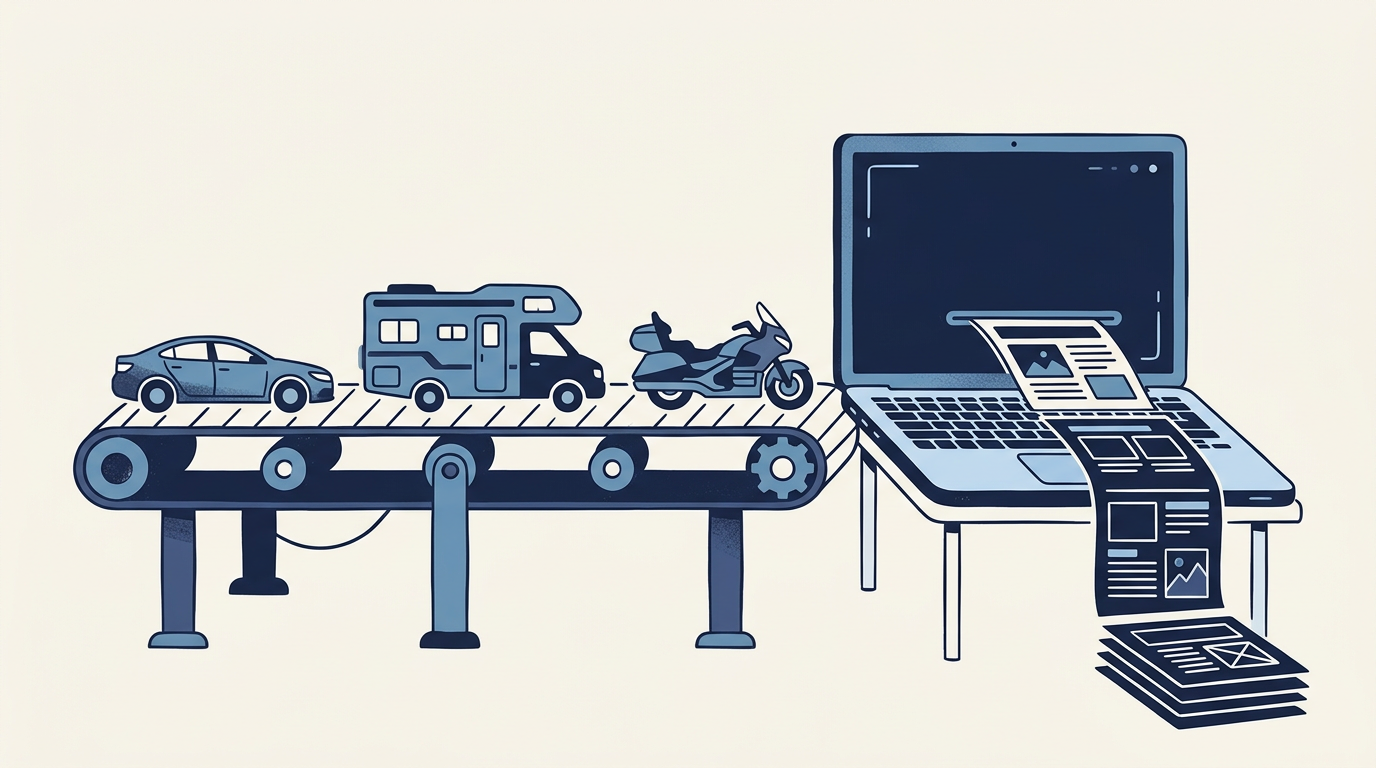
You don’t need a room full of writers to publish daily content.
With automated dealership content, you can turn your data and workflows into SEO pages that attract ready-to-buy shoppers.
Less manual writing. More consistent publishing. Better local visibility.
Here’s how to build a content engine that runs without hiring writers.
Why a content engine beats ad spend alone
Ads stop the moment you stop spending. Content keeps working weeks and months after you publish.
A content engine gives you compounding traffic, lead capture, and brand search lift across sales, service, and parts.
Automation adds consistency. Consistency builds topical authority. Authority earns rankings and trust.
Define success before you automate
Start with outcomes, not tools. What should your content engine produce and why?
Tie outputs to business goals so you know what to automate first and what to measure every month.
- Organic leads from key models and services
- More ranking pages for nearby cities you serve
- Higher engagement on inventory, specials, and service pages
- More map views and calls from Google Business Profile
- Email and social clicks from repurposed posts
What automated dealership content can cover
Automated dealership content is not just blog posts. It’s any repeatable page or update your store needs across seasons and departments.
- Inventory collection pages (e.g., used trucks under 20k, RVs with bunk beds, 250cc dirt bikes)
- Monthly specials and incentives pages with dynamic copy
- Service and maintenance guides by mileage or season
- Model overview pages and trim comparisons
- Local and regional landing pages for nearby cities
- Accessory and parts spotlights by category
- Finance education articles and trade-in explainer pages
- Event recaps, ride days, boat shows, demo days
- Safety and how-to content for powersports and marine
- Trailer, equipment, and motorcycle buyer’s guides
Automate the structure and the data. Keep a human eye on brand voice and compliance.
Build your automated dealership content stack
You don’t need dozens of apps. A lean stack with the right connections beats a bloated one every time.
- CMS with API access and scheduled publishing
- Inventory feed (VDP/CSV/API) and specials data source
- AI-assisted writing with reusable prompts and guardrails
- Template library for pages and posts
- Image library or generator with brand-safe styles
- QA checklist and approval workflow
- Analytics, Search Console, and rank tracking
- Local listings management for hours and NAP consistency
Pick tools that integrate, export cleanly, and won’t lock you into one vendor.
Create templates that scale
Templates turn repeatable content into a fill-in-the-blanks system you can automate and lightly edit.
- Blog template: hook, problem, steps, local angle, CTA
- Service guide: symptoms, intervals, OEM tips, what’s included, booking CTA
- Model overview: features, trims, who it fits, alternatives, FAQs
- Inventory collection: criteria, benefits, current highlights, internal links
- Location page: city intro, driving directions, services, featured inventory
- Event page: details, RSVP, map, post-event recap placeholder
- FAQ module: schema-ready list, short answers, internal links
Lock format and sections. Vary details with data and prompts.
Feed your engine: data sources you already have
The best automation fuel is the data you own. It’s accurate, timely, and relevant to your customers.
- Inventory feed: year, make, model, trim, body, specs, features
- Pricing and specials: monthly promos, manager notes, featured units
- Service menus: OEM intervals, packages, coupons
- CRM and call logs: top questions, objections, seasonal trends
- Google Business Profile: Q&A, reviews, hours updates
- Event calendars: ride days, boat shows, open houses
- Local knowledge: delivery areas, nearby lakes/trails, towing laws
Map each data point to a template field or prompt variable so content updates itself.
Human-in-the-loop workflow
Automation drafts. Humans approve. That’s how you keep accuracy, tone, and compliance tight.
- Content calendar generates tasks and due dates
- AI produces first draft from template + data
- Editor checks facts, brand voice, and local details
- Manager approves legal/disclaimer and compliance items
- Publish to CMS with scheduled internal links
- Promote via email, social, and GBP posts
- Monitor performance and push learnings back into prompts
Keep the review touches light and focused. Minutes, not hours.
Programmatic SEO the right way
Programmatic does not mean copy-paste pages. It means structured templates plus unique local and product data.
Aim for uniqueness at the query level: different intent, different city, different unit attributes, and different angles.
| Approach | Pros | Cons | Best for |
|---|---|---|---|
| Manual writing | High craftsmanship; bespoke tone | Slow; costly; inconsistent output | One-off hero pages and big campaigns |
| Automated dealership content engine | Scales fast; consistent structure; data-rich | Needs QA and strong templates | Inventory, service guides, local pages, specials |
| Hybrid workflow | Balance speed and quality | Requires clear roles and SOPs | Most dealerships aiming for volume + polish |
Avoid thin variations. If two pages target the same intent, merge or rewrite one.
Publishing cadence and calendar
Set a realistic rhythm. It’s better to publish weekly forever than daily for two weeks and stop.
- Weekly: one educational blog or service guide
- Monthly: one inventory collection page and one specials update
- Quarterly: refresh top model pages and top city pages
- Seasonal: safety checks, towing/launch guides, winterization/de-winterization
- Event-based: pre/post coverage with photos and short recaps
Use scheduling so posts go live even when your team is slammed on a Saturday.
Ensure compliance, accuracy, and brand voice
Templates carry your tone. Checklists catch issues. Disclaimers protect the store.
- Maintain a style guide: reading level, terms to use/avoid, CTAs
- Lock compliance blocks: offers, financing caveats, OEM trademarks
- Fact-check with your DMS, OEM resources, and service manuals
- Run plagiarism and duplication checks for programmatic pages
- Add schema markup to eligible pages for rich results
- Train editors to scan for safety claims and avoid absolutes
When in doubt, simplify the language and focus on education over hype.
Measure, learn, and optimize
If you can’t measure it, you can’t improve it. Track at the page-type level, not just sitewide.
- Organic sessions and impressions per template type
- Click-through rate from titles/meta and GBP posts
- Assisted conversions: form fills, calls, directions
- Time on page and scroll depth for long guides
- Internal link clicks to inventory and service booking
- Indexation, coverage, and crawl stats in Search Console
- Ranking movement for target queries by city or model
Feed your winners into more templates. Retire what doesn’t move the needle.
Final thoughts
You can build a durable content engine without hiring writers by combining templates, your own data, and a fast human review loop.
Automated dealership content makes publishing predictable, affordable, and measurable—so your store shows up when local shoppers search.
Suggested internal links for this article
- Programmatic SEO for Dealers: Turning Data into Pages
- Templates Every Dealer Needs: Model, Service, and City Pages
- How to Automate Service Specials Without Breaking Compliance
- Building a Dealer Content Calendar That Your Team Will Follow
- Internal Linking Strategies to Move Inventory Faster
- Measuring Content ROI in Google Analytics and Search Console
Related resources
- Dealership SEO Software
- AI SEO for Car Dealerships
- WordPress Dealership Blog Automation
- Dealer Blogs vs SEO Agency
- How to Find Blog Topics That Attract Real Vehicle Shoppers
- Pricing
Related articles
Automotive Content Automation: How Dealerships Can Publish More Without Hiring Writers
Consistent publishing is hard for dealerships. Content automation helps stores build search visibility without managing topics, writers, formatting, and posting.
Feb 24, 2026 · 7 minAutomationDealership Blog Automation: How to Publish Fresh Content Without a Marketing Team
No marketing team? No problem. Learn how dealership blog automation keeps fresh, SEO-friendly content publishing every week without extra headcount.
Jul 29, 2026 · 8 minAutomationDealer Blog Automation vs Hiring an SEO Agency
Should you automate your dealership blog or hire an SEO agency? Compare costs, speed, control, and results so you can publish consistently and grow local traffic.
Aug 31, 2026 · 8 minDealer Blogs turns your data and templates into polished articles and pages on a reliable schedule. Light human review, heavy automation, real results.