
Choosing an Automotive SEO Company That Actually Moves Inventory
What to look for in an automotive SEO company that aligns with your lot, supports inventory, and drives real showroom activity.
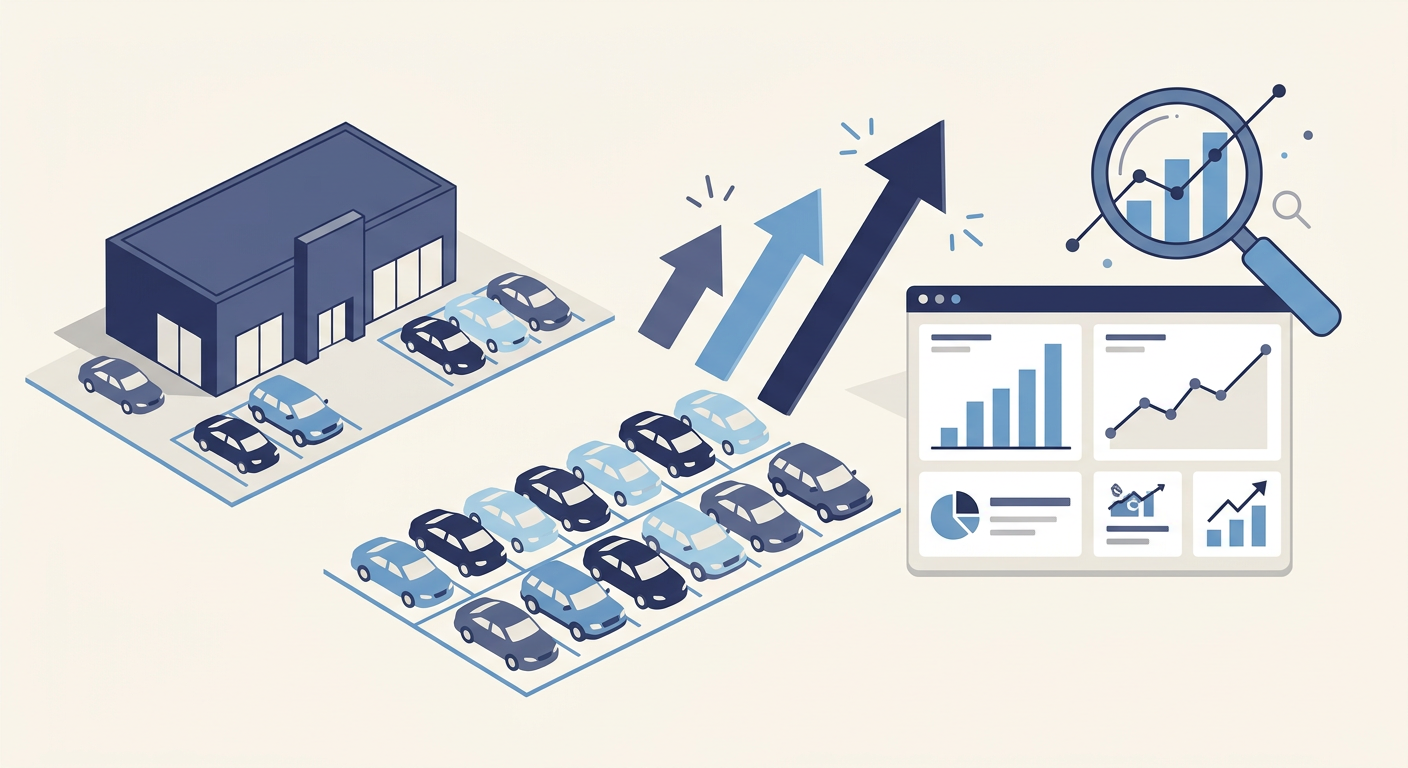
You don’t need more SEO jargon. You need more qualified shoppers on your SRPs and VDPs.
If an automotive SEO company can’t tie content to inventory movement, keep walking.
The right plan turns local search demand into calls, chat leads, and showroom visits.
Here’s how to choose a dealership SEO provider that actually supports your lot.
What “moves inventory” really means for dealership SEO
Moving inventory with SEO means capturing intent from people who are actively shopping in your market, then guiding them to the right vehicles, services, or trade paths.
You should see more organic sessions to SRPs/VDPs, higher lead form starts, phone calls, and map actions from organic search—not just generic traffic.
It also means content that aligns with what’s physically (or soon-to-be) on your lot, so search demand routes into pages that can convert.
How to vet an automotive SEO company
Start with fit. Do they understand your mix—franchise vs independent, new vs used, your price bands, and your local buyer questions?
Ask them to map how content will connect shoppers to inventory and service pages. Review sample topic maps and internal linking plans that reflect your store and market, not a template. For more context on ranking fundamentals, review Car Dealership SEO to see how content supports franchise and independent stores.
- Ask for a 90-day content calendar tied to SRPs/VDPs and service pages
- Require examples of localized model research, comparison, and buyer-question posts
- Confirm how they’ll structure internal links to support category and model pages
- Request sample reports that tie posts to leads, calls, and map actions
If you want a quick checklist, this guide pairs well with our deep-dive: Automotive SEO Companies: What to Look For Before You Hire One.
Must-have SEO foundations for dealers
Great content won’t carry a broken site. Your provider should address technical, local, and content foundations in parallel.
- Technical: crawlability, indexation, core web vitals, templated metadata, canonicalization, pagination on SRPs
- Local: Google Business Profile optimization, category selection, service area clarity, local citations, reviews strategy
- Content: model research, comparisons, used-vehicle topics, trade-in and finance questions, service and parts education
Hold them to a short, prioritized punch list with owners and dates—not a never-ending audit deck.
Content that actually supports inventory
Content should funnel shoppers from educational queries to the right SRPs and VDPs without friction.
- Model research that links to trims and relevant SRPs
- Head-to-head comparisons that steer to in-stock or orderable lines
- Trade-in, budget, and financing question posts that link to tool pages
- Used-vehicle buyer guides by body style, mileage, or payment range
- Seasonal pieces that pair with timely inventory pushes or service offers
Avoid generic posts that could be published in any city. Tie examples, roads, and seasonality to your market.
Make every post conversion-friendly: clear CTAs, dealer phone number visible, internal links to categories and featured inventory.
Targeting local intent at scale
Local intent is specific and buyer-led. Capture it with topics that mirror how people actually search in your area.
- Best midsize SUV for winter driving in [City]
- Used trucks under $30K near [City]
- Honda CR-V EX vs EX-L for commuters in [City]
- Lease vs finance for first-time buyers in [City]
- Where to service a Toyota hybrid in [City]
- How trade-in tax credits work in [State]
Structure posts so the first internal links point to the most relevant SRPs, not just the homepage.
Evaluating strategy, reporting, and attribution
Your automotive SEO company should forecast, measure, and adjust—monthly.
- Report on organic traffic to SRPs/VDPs, goal completions, calls from organic, directions, GBP actions, and assisted conversions
- Attribute posts to outcomes with page-level goals and call tracking
- Show internal link click-through and paths to inventory pages
- Review keyword movement by topic cluster, not just vanity phrases
If reports are all rankings and no actions, you’re not measuring inventory movement.
Questions to ask an automotive SEO company
Use these to test for dealership reality vs agency rhetoric.
- How will you choose topics that match our lot and local demand?
- What’s your plan for internal linking into SRPs/VDPs and service pages?
- How do you localize content beyond just swapping city names?
- What do your 30/60/90-day deliverables look like?
- What will you need from our team, and how much time each month?
- How will you measure leads and calls that started from content?
- What does success look like in 90 and 180 days?
- How do you handle model-year transitions and discontinued trims?
- Can you scale used-vehicle content without duplicate issues?
- How do you coordinate with our paid search and social teams?
- What happens if traffic goes up but leads don’t?
- Who writes, who edits, and what’s your automotive experience?
Red flags in a dealership SEO provider
If you hear these, hit pause.
- Guarantees of #1 rankings or instant results
- Thin “city-swap” blog posts with no real local value
- Content published with zero internal links to inventory
- Reports that only show traffic or impressions, not actions
- No plan for GBP optimization or local citations
- No clear owner for technical fixes or timelines
- Long contracts without performance transparency
Agency vs software vs in-house: choose the model
There’s no single right answer. Your budget, team capacity, and timeline decide the mix.
If you’re comparing partners, this rundown helps frame tradeoffs: Dealer Blogs vs SEO Agency.
| Model | Strengths | Considerations |
|---|---|---|
| SEO Agency | Hands-on strategy, custom campaigns, cross-channel coordination | Higher cost, variable content velocity, depends on account talent |
| Automated Platform | Scales localized content, consistent cadence, transparent deliverables | Needs clear inputs and internal links aligned to your site |
| In-House Staff | Deep brand knowledge, quick approvals | Hiring cost, content bandwidth, process discipline required |
Many dealers land on a hybrid: platform for scalable content plus a strategist for local priorities and technical oversight.
Budgeting and ROI expectations
Budget should reflect your market size, inventory breadth, and growth goals—not just a race to the lowest monthly fee.
If you want ballpark ranges and what affects them, see how teams frame value on Dealership SEO Pricing.
- KPIs to watch: organic sessions to SRPs/VDPs, lead forms, calls, GBP actions, assisted conversions, and revenue attribution where available
- Leading indicators: keyword coverage by model/trim, internal link CTR, returning user growth on research content
- Lagging indicators: search-to-store engagement and sell-through on focused categories
Expect compounding gains as topic clusters deepen. Content is an asset—older posts can keep feeding inventory pages.
Implementation timeline: 30/90/180+ days
First 30 days: foundations, plan, and early wins.
- Technical quick fixes and tracking cleanup
- GBP optimization and citation updates
- Topic mapping to inventory and service categories
- First content clusters drafted and scheduled
Days 31–90: publish, link, and calibrate.
- 2–4 posts per week focused on model research, comparisons, and used-vehicle demand
- Internal links into SRPs/VDPs, finance, and trade tools
- Monthly reporting with adjustments by topic and city-area intent
Days 91–180+: scale and refine.
- Expand into seasonal and service/parts clusters
- Refresh high-performers and redirect underperformers
- Add location pages or hub pages as authority grows
Where Dealer Blogs fits in your plan
Dealer Blogs is purpose-built to publish localized, inventory-supporting content at a steady cadence. If you need reliable output and clean internal linking guidance, start with our Dealership SEO Software.
Want to understand the role of automation in your stack? Here’s how we use AI to scale topic coverage without throwing out human editing: AI SEO for Car Dealerships.
Some stores pair our platform with a strategist or an internal marketer. You keep visibility and control while content momentum never slips.
Final thoughts
The right automotive SEO company aligns to your lot, your local market, and your reporting stack. They make it easy to see how content turns into calls and showroom visits.
Choose a partner that can show their work, publish consistently, and tie every post to a next step for the shopper. That’s how SEO helps move inventory.
Related resources
- Dealer Blogs vs SEO Agency — Compare agency retainers with a scalable content platform.
- Dealership SEO Software — See how automated publishing supports SRPs and VDPs.
- Car Dealership SEO — What it takes for franchise and independent stores to rank locally.
- AI SEO for Car Dealerships — How automation helps scale local topics responsibly.
- Automotive SEO Agency vs Automated Content Software: Which Is Right for Your Dealership? — Pros and cons of each model.
- Auto Dealer SEO: How to Rank Higher and Sell More Cars Online — A practical roadmap for capturing local search demand.
Related articles
Automotive SEO Companies: What to Look For Before You Hire One
Comparing automotive SEO companies? Here’s how to vet strategy, content, reporting, and fit so you pick a partner that grows traffic, leads, and sales-ready visits.
Jul 25, 2026 · 8 minSEO StrategyWhat to Look For in an Automotive SEO Company
Shopping for an automotive SEO company? Here’s how to vet services, pricing, reporting, and fit so your dealership gets real search traffic and leads.
Sep 25, 2026 · 8 min read.Dealer SEOSEO for Car Dealerships in 2026: What Actually Moves the Needle
Dealership SEO has changed. Inventory pages still matter, but Google, AI search, and buyer-intent content are now shaping how shoppers discover local dealers.
Mar 12, 2026 · 7 minDealer Blogs automates localized, inventory-supporting articles every week—planned, written, edited, and scheduled for you. See how it fits your stack.